
Best Overall Tub
The best cold plunge tubs
Six tubs ranked on volume, insulation and whether you can actually lie down.
Top pick: Ice Barrel 300 Cold Plunge Tub
#ad Price as of October 23, 2026 — confirm it on Amazon.
The single most expensive mistake in this category is pairing a small chiller with a big tub. Here is the arithmetic that prevents it, and the specs that decide the rest.

Each roundup opens with a comparison table and names a top pick, a value pick and at least one unit we tell you to skip. Where Amazon's own data has a current price, the buy button shows it with the date it was checked; confirm it on Amazon before you commit.
Six tubs ranked on volume, insulation and whether you can actually lie down.
Top pick: Ice Barrel 300 Cold Plunge Tub
#ad Price as of October 23, 2026 — confirm it on Amazon.

Six chillers sized against real tub volumes — with the pull-down figure nobody publishes.
Top pick: AS ColdPlunge 1/3 HP Chiller, Built-In Filter and Pump
#ad Price as of October 23, 2026 — confirm it on Amazon.
Where the value actually sits — usually in the tub, not the chiller.
Top pick: Ice Barrel 300 Cold Plunge Tub
#ad Price as of October 23, 2026 — confirm it on Amazon.

Portable, affordable and seam-limited — five inflatables and who each suits.
Top pick: CalmMax Inflatable Cold Plunge Tub, 115 Gallon
#ad Check the current price on Amazon.
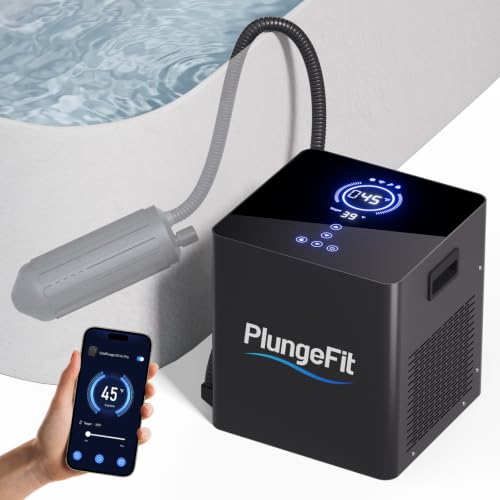
Chilling the bath you already own — which units work, and the three catches.
Top pick: Cold Plunge Chiller Pro, 1/2 HP Drop-In
$599.00 · 8% off
#ad Price as of October 23, 2026 — confirm it on Amazon.

Filters, ozone and the venturi injector that makes ozone actually dissolve.
Top pick: Cold Plunge Filter System, 10" Housing, 50 Micron
$77.97 · 16% off
#ad Price as of October 23, 2026 — confirm it on Amazon.

Outdoor plunges ranked on shell construction, insulation and the chiller load an outdoor tub really imposes.
Top pick: ICECON Professional Rotomolded Cold Plunge Tub
#ad Price as of October 23, 2026 — confirm it on Amazon.

Tubs judged on published interior dimensions rather than gallons — and what the extra water costs to chill.
Top pick: SWRORDAWN XXL Inflatable Cold Plunge Tub, 179 Gallon
#ad Price as of October 23, 2026 — confirm it on Amazon.
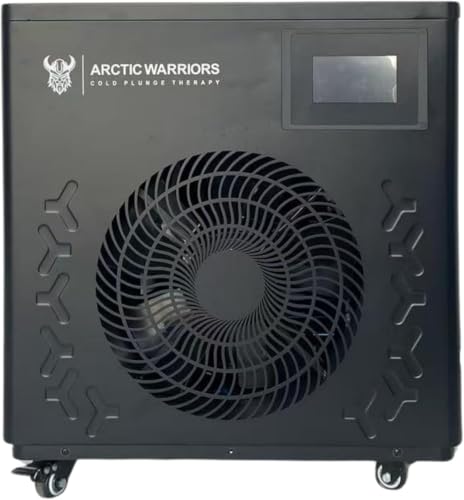
Chillers that heat as well as cool — and an honest account of what the heat mode can and cannot do.
Top pick: Healcryo 1.5 HP Cold Plunge Chiller, 12,000 BTU/h, Heat and Cool
#ad Price as of October 23, 2026 — confirm it on Amazon.

Packable plunges compared on packed size, setup and drain time — and what repeated folding really costs.
Top pick: XXL Inflatable Ice Bath Tub, 148 Gallon
#ad Price as of October 23, 2026 — confirm it on Amazon.

Plunges for two, on capacity, chiller headroom and water care — together or taking turns.
Top pick: AudaciaGo XXL 216-Gallon Inflatable Cold Plunge
#ad Price as of October 23, 2026 — confirm it on Amazon.

Upright barrels and pods on seated depth, capacity, insulation and entry — the smallest-footprint plunge.
Top pick: Ice Barrel 500 Freestanding Cold Plunge
#ad Price as of October 23, 2026 — confirm it on Amazon.

Cedar-clad plunges with stainless interiors, on chiller, range, capacity and shape.
Top pick: Smartmak Oval Red Cedar Cold Plunge Tub with 1 HP Hot and Cold Chiller
#ad Price as of October 23, 2026 — confirm it on Amazon.

Tub-and-chiller kits on published cooling capacity, minimum temperature and filtration.
Top pick: AS ColdPlunge 1/3 HP Chiller with 100 Gallon Tub Kit
#ad Price as of October 23, 2026 — confirm it on Amazon.

Plunges that fit a flat — on filled weight, drainage, storage and noise.
Top pick: The Cold Pod Ice Bath Tub, 88 Gallon, with Cover
#ad Price as of October 23, 2026 — confirm it on Amazon.

Stock tanks used as plunges, on published capacity, steel gauge and depth — plus cover and chiller.
Top pick: Behlen Country 78-Gallon Galvanized Round Stock Tank
#ad Price as of October 23, 2026 — confirm it on Amazon.

Tubs and one tub-plus-chiller setup under $1,000, compared on gallons, interior dimensions, insulation and what you still have to buy.
Top pick: Drexo Cold Plunge Tub with 1 HP Hot and Cold Chiller
#ad Price as of October 23, 2026 — confirm it on Amazon.

First-plunge tubs compared on insulation, interior size and drains — and what to skip until you know you will keep going.
Top pick: Lifepro NordPod Ice Bath Tub, 102 Gallon
#ad Price as of October 23, 2026 — confirm it on Amazon.

Tubs and one chiller under $500, on insulation, interior size and what the budget cannot stretch to.
Top pick: BEYOND MARINA Slanted-Edge Inflatable Cold Plunge Tub, 155 Gallon
#ad Price as of October 23, 2026 — confirm it on Amazon.

Cold plunge chillers for outdoor use on published ambient limits, IP ratings, GFCI protection and noise.
Top pick: Active Aqua Outdoor Cold Plunge Chiller, 1/3 HP, Built-In Pump and Filter
$1,199.00 · 17% off
#ad Price as of October 23, 2026 — confirm it on Amazon.

Ice makers for plunge use on lb/24 h output, cycle time, bin capacity, drainage and published energy draw.
Top pick: EUHOMY Commercial Ice Maker, 100 lb/24 h, 33 lb Bin
$309.99 · 10% off
#ad Price as of October 23, 2026 — confirm it on Amazon.
Cold plunges ranked on getting in and out — published wall height, slanted backs, included steps and exit grip.
Top pick: BEYOND MARINA Slanted-Edge Inflatable Cold Plunge Tub, 155 Gallon
#ad Price as of October 23, 2026 — confirm it on Amazon.
Nearly every unhappy cold plunge setup we read about is the same story: someone bought a 216-gallon tub because it looked comfortable, then paired it with a 1/3 HP chiller because it was the affordable one. The chiller runs continuously and never gets there. Neither component is faulty. The pairing is.
| Chiller | Tub volume it can realistically hold cold | Published minimum temp |
|---|---|---|
| 1/3 HP | Up to roughly 100 gallons, indoors, insulated | 42 °F |
| 1/2 HP | Roughly 100–150 gallons | 39 °F |
| 2/3 HP | Roughly 150 gallons; publishes a 3–9 hour pull-down from 90 °F | 39 °F |
| 1 HP (10,000 BTU) | 150 gallons and up, or outdoors in heat | 37 °F |
Minimum temperatures above are the manufacturers' published figures. The volume column is our own reasoning from those figures plus insulation and ambient temperature — no manufacturer publishes a volume rating, which is precisely why this table had to be built rather than quoted. Full working in the chiller sizing guide.
Three variables move those numbers more than anything on the spec sheet: whether the tub is insulated, whether it has a lid, and whether it lives indoors or out. An insulated tub with a lid in a garage is a completely different thermal problem from a bare inflatable on a sunny patio, and the same chiller will succeed at one and fail at the other.
Ice is cheaper to start and relentless to continue. A chiller is expensive once and then costs you electricity. Where the crossover sits depends on your tub volume, your local ice price and your session frequency — all three of which are yours, not ours, so we show the arithmetic rather than a verdict in chiller vs ice and put the electricity side in cold plunge running costs.
The short version: if you plunge two or three times a week in a small insulated barrel, ice remains defensible for a long time. If you plunge daily, or your tub is over about 100 gallons, the ice bill catches a chiller faster than most people expect.
These are two different jobs and people routinely do only the first. A filter removes what you can see — skin, hair, debris — and a 50-micron cartridge in a standard 10-inch housing handles it for a few dollars a cartridge. Sanitation deals with what you cannot see, and that is ozone or a chemical. Filtering without sanitizing gives you clear water that is still biologically alive.
If you are adding ozone, add a venturi injector with it. Ozone bubbled into standing water mostly escapes to the air; drawn through a venturi into a moving line, it dissolves and does the job. That single part is the difference between an ozone system that works and one that mostly makes a noise. Both are covered in best cold plunge filters and the filtration guide.
The break-even, shown as arithmetic you can run with your own numbers.
Read it
Two names, one practice — and the one difference that actually matters.
Read it
The spec list to demand from any direct-sales plunge brand — and what you can buy now.
Read itThe 300 against the 500 — 28 gallons that decide whether you fit.
Read it
Sun Home's plunge from published material — plus integrated setups you can buy today.
Read it
The sizing arithmetic nobody publishes — with the assumptions named so you can check it.
Read it
The electricity arithmetic — and why the tub matters more to your bill than the chiller.
Read itWhat each part of a water-care system does — and the job none of them do.
Read itWhat temperatures the research actually used — and why colder is not better.
Read itStock tanks, insulation and the chest-freezer idea we will not endorse.
Read itWhich weaknesses are a cheap fix, and which mean buying again.
Read itDurability, insulation, portability and failure modes — which tub type suits which buyer.
Read itPlumbing, filtration, leak risk and capacity — which chiller type suits which tub.
Read itSun Home's largest integrated plunge, read from its published specs — and what you can buy instead.
Read itTwo premium plunge-and-sauna brands, side by side on their published specifications.
Read itWhen a home cold plunge earns its place — and the costs beyond the tub that decide it.
Read itSun Home's inflatable plunges, read from its published specs — and the capacity figure to confirm.
Read itSun Home's three Pro plunges on capacity, footprint, weight and features.
Read itTwo premium plunge makers on cold, construction, circulation and warranty.
Read it
Cold water against hot, and the hot-and-cold chillers that put both in one tub.
Read itStainless, acrylic, aluminum and molded plastic tubs, on what each maker publishes.
Read itWhole-body cryotherapy against cold water immersion on temperature, duration, cost and access.
Read itCold shower against cold plunge on temperature control, coverage and cost — and when the shower is enough.
Read itSun Home's integrated Pro against its portable Horizontal, on what each publishes.
Read itVITAL+ tubs and chillers on capacity, cold, fit, filtration and warranty.
Read itLIT's stainless plunges on build, filtration, temperature range and warranty.
Read it
Fire's all-in-one plunge on cold, winter operation, upkeep and warranty.
Read itThe NordPod and the Elite on capacity, fit, build and chiller readiness - and why the Plus is no longer on Amazon.
Read itLifeTrend's Classic, Alta, Solitude, SnowBird and Sierra plunges on gallons, chiller output, temperature range and warranty terms.
Read itOrca's Migaloo, Mammoth, Ice Pod and Ice Barrel tubs and its 3/4 and 1 HP chillers, on published specifications.
Read itThe weekly routine, the drain cadence, and what changes when you add a filter or ozone.
Read itWhat freezes first, drain versus run-through, and how to protect hoses, filters and the chiller below freezing.
Read it