Red light panels, and the one spec nobody publishes
Wavelength and LED count are on every listing. Irradiance at a stated distance — the number that actually determines dose — is on almost none of them.
Start with the picks
Each roundup opens with a comparison table and names a top pick, a value pick and at least one unit we tell you to skip. Where Amazon's own data has a current price, the buy button shows it with the date it was checked; confirm it on Amazon before you commit.
#ad Price as of October 23, 2026 — confirm it on Amazon.
The spec that matters is the one you cannot get
Red light dose is irradiance multiplied by time. Irradiance — milliwatts per square centimeter, at a stated distance — is the only figure that lets you compare two panels or work out how long a session should be. We read a dozen listings for this hub. Not one published irradiance at a stated distance.
What they publish instead is wattage, and that wattage is an LED rating rather than measured wall draw. A panel advertised at 1,500 W does not consume 1,500 W and does not deliver it to your skin. This is not a small caveat: it means the headline number on almost every red light panel is not comparable to the headline number on any other. We explain what irradiance is, why the distance matters so much, and how to reason without a published figure in irradiance explained.
What you can compare
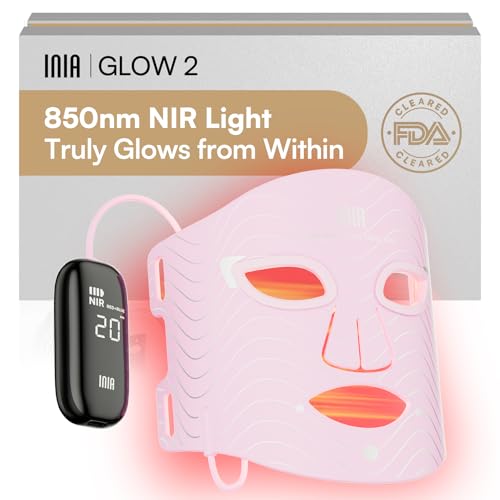
1Wavelengths, in nanometres. 660 nm red and 850 nm near infrared are the two with the deepest research base. Panels offering four wavelengths span more of the studied range, but the evidence outside 660 and 850 is thinner — more is not automatically better.
2Dual chip versus single chip. A dual-chip LED emits both wavelengths from every diode. A single-chip board alternates them across the panel, which means coverage is striped rather than even. This is a real, checkable difference.
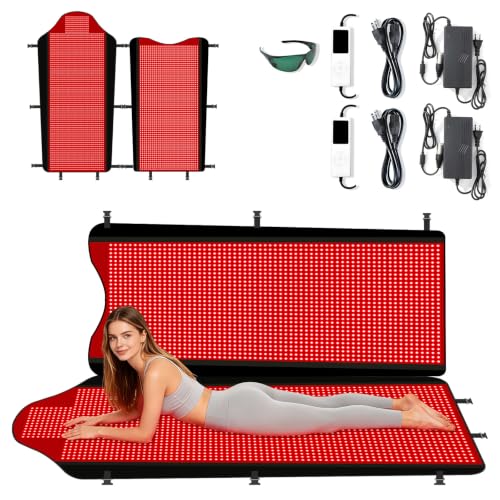
3Board dimensions. Published in inches by the better listings. A 36 × 8 inch board covers a back; it does not cover a body. Panel size determines how many positions and how many timers a full-body session takes.
4Flicker. A flicker-free claim is a statement about driver quality and it is worth something. Cheap drivers pulse at mains frequency, which is visible in a camera and unpleasant over a long session.
Panel, in-sauna tube, or both
Many infrared cabins now ship with red-light tubes built in, and several sell them as an upgrade for a cabin you already own. That is a genuinely different product from a standalone panel: an in-sauna tube is convenient and always low output, while a standalone panel gives you control over distance and duration but requires its own space and its own session. We compare the two honestly in panel vs in-sauna red light, and if you own a cabin already, adding red light to an existing sauna covers what is actually retrofittable.
On the health claims
This category attracts extraordinary claims and we are not going to repeat them. Red light therapy — photobiomodulation, in the literature — has a real and growing research base, particularly around skin and localized musculoskeletal outcomes. It also has a large volume of marketing that runs well ahead of what has actually been shown, and a habit of citing "a growing body of research" with no research attached.
Our position is simple: every physiological claim on this site links to a specific source, or it does not appear. Where the evidence is thin or contested, we say so. Red light therapy evidence is written to that standard, and it is deliberately less exciting than the marketing you will read elsewhere.
Where to start
If you want one panel to cover a body, start with best red light therapy panels. If your budget is tighter, best panels under $500 covers what changes as the price drops — mostly output per diode and board area. And if you are choosing between a red light panel and an infrared sauna for recovery, red light vs infrared sauna explains why those two things are far less similar than the shared word 'infrared' suggests.
Questions people actually ask
What irradiance should a red light panel have?
It is the right question and it is close to unanswerable from the listings, because essentially nobody publishes irradiance at a stated distance. Published research typically works in the tens of mW/cm² at the skin. Without a manufacturer figure and a distance, you cannot verify what any given panel delivers — so we compare on wavelength, LED type, board area and driver quality instead, and say plainly that this is a compromise.
Is 660 nm or 850 nm better?
They do different things. 660 nm red is absorbed close to the surface and is where most skin research sits. 850 nm near infrared penetrates further and is where most of the deeper-tissue work sits. Dual-chip panels emit both from every diode, which is why we treat dual chip as a meaningful spec rather than a marketing term.
Do I need a panel if my sauna already has red light tubes?
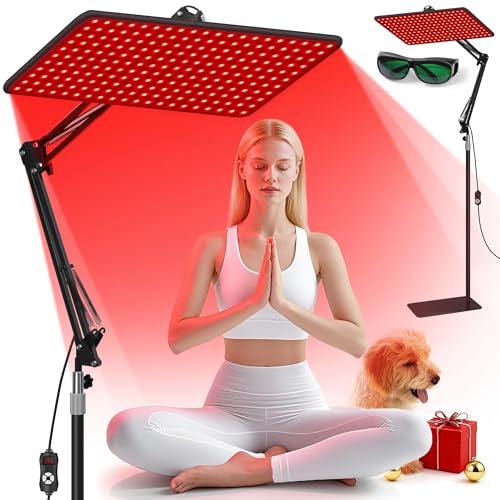
Probably not for convenience, possibly yes for output. In-sauna tubes are low output and fixed in position; a standalone panel lets you control distance and duration, which are the two variables that determine dose. If your cabin's tubes are the only red light you want, they are fine. If you are trying to hit a specific protocol, a panel gives you control the cabin cannot.
Does advertised wattage tell me anything useful?
Very little. The wattage on a red light listing is almost always the sum of the LED ratings, not measured draw at the wall, and neither figure tells you what reaches your skin. Treat it as a rough proxy for panel size and nothing more.