Sauna permits and codes
There is one model-code section written specifically about sauna heaters, and it is not in the electrical code. Everything else — permits, setbacks, whether your shed exemption survives — is local, and it varies more than people expect.
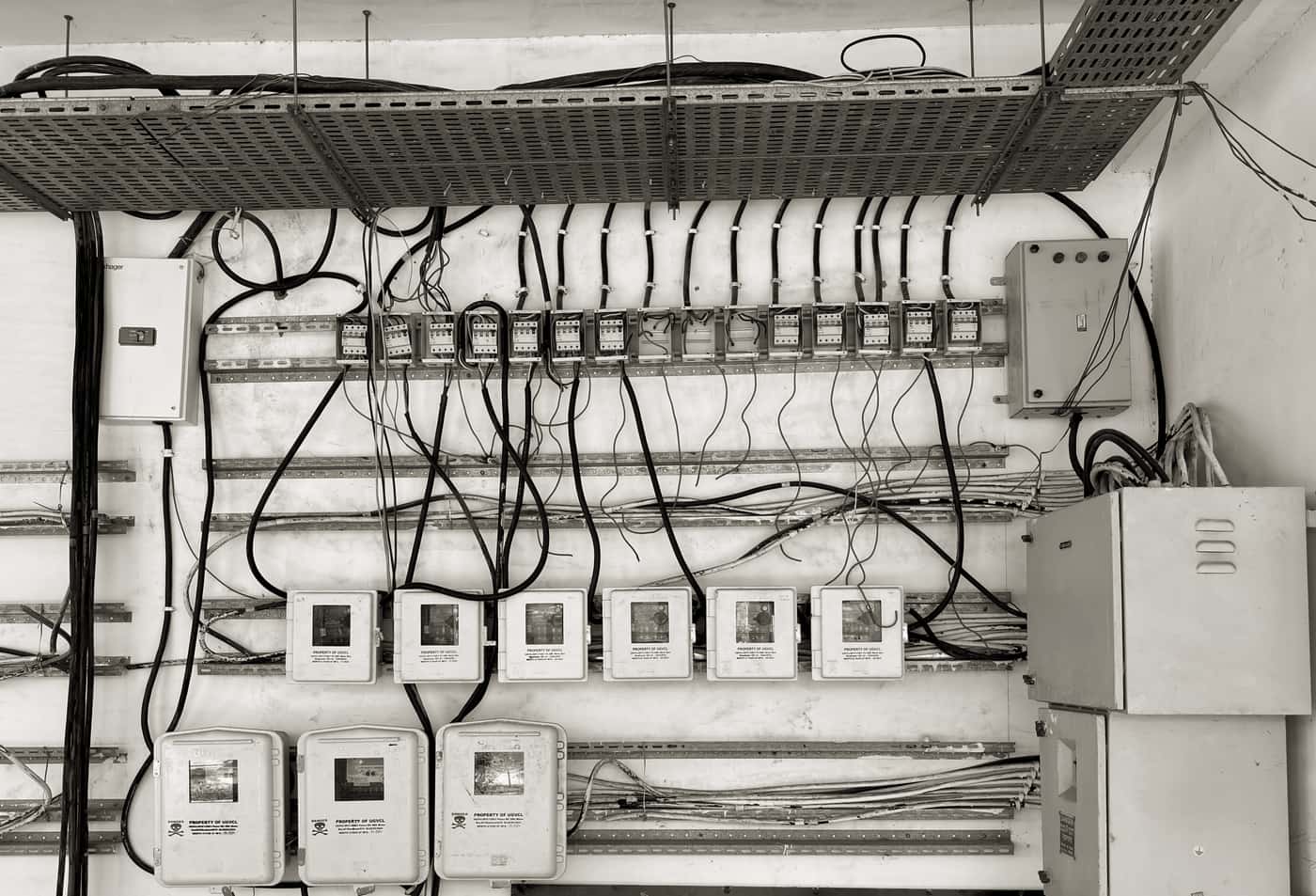
The short version: the model residential code contains a section titled Sauna Heaters, and it does three things — requires installation per the manufacturer's instructions, requires the heater to comply with UL 875, and caps room temperature at 194 °F with a thermostat. The electrical side is governed by the general space-heating rules rather than any sauna-specific article. Whether you need a building permit is a local question that usually turns on one word in your city's accessory-structure exemption: heated, conditioned, or has electrical.
The code section that is actually about saunas
- Installation and listing: sauna heaters shall be installed in accordance with the manufacturer's instructions and shall comply with UL 875.
- Guarding: sauna heaters shall be protected from accidental contact by a guard of low-thermal-conductivity material, such as wood — which is why a heater guard is a code item rather than an accessory.
- Temperature limit: the heater shall have a thermostat limiting room temperature to not greater than 194 °F (90 °C). Where the thermostat is not integral to the heater, the sensing element goes within 6 inches of the ceiling.
- Timers: in the fuel-gas parallel section, a timer controlling main burner operation has a maximum operating time of one hour, and its control must be outside the sauna room.
- Combustion air: non-direct-vent heaters need combustion air and venting per the relevant chapters — the section that matters for wood-fired rooms.
Those figures explain several things people find odd about sauna equipment: why controllers so often sit outside the room, why the sensor is at ceiling height, and why 194 °F keeps appearing as a ceiling in product literature. Our sauna temperature guide covers what that means in use.
The electrical rules that apply
There is no article of the National Electrical Code titled Saunas. A hardwired heater falls under the fixed electric space-heating rules, and a cord-and-plug cabin under the appliance rules. The provisions that come up in a sauna inspection are these.
| Provision | What it requires |
|---|---|
| Continuous load sizing | Branch-circuit conductors and overcurrent devices sized at not less than 125% of the heating load — a 6 kW, 240 V heater drawing 25 A needs conductors good for about 31 A |
| High-temperature supply conductors | Equipment requiring conductors with insulation above 60 °C must be permanently marked, and the marking visible after installation |
| Damp and wet locations | Equipment in damp or wet locations must be listed for those conditions |
| Clearance to combustibles | Installation must respect required spacing from combustible material unless the equipment is listed for contact |
| Disconnecting means | A means to disconnect all ungrounded conductors, within sight of the equipment or capable of being locked open |
| Thermostat as controller | A thermostat used as the controller must open all ungrounded conductors in the OFF position |
From published summaries of NEC Article 424 read on 2026-09-27. Your jurisdiction's adopted edition and amendments govern; confirm article numbers with your inspector.
Two practical notes. First, ambient temperature correction is the reason sauna heaters call for high-temperature wire inside the hot room: a 90 °C-rated conductor loses most of its usable ampacity as the surrounding air approaches the 90 °C room limit, so the ordinary building wire stops outside the room and high-temperature wire finishes the run. Second, "dedicated circuit" is not a sentence in the electrical code — it is in your heater's installation instructions, and the code makes those instructions mandatory. Our outdoor sauna electrical guide covers what to put in an electrician's scope.
GFCI: the honest answer
We could not find any code section that names saunas for GFCI protection. The receptacle rules apply to receptacles, and a hardwired heater is not one; the specific-appliance GFCI list names a dozen appliances and saunas are not among them. What does frequently catch an outdoor sauna is the rule requiring GFCI protection for outdoor outlets at dwellings. So: ask your inspector, in writing, whether they require GFCI on your configuration — and check the heater's instructions, because some manufacturers have views about GFCI and nuisance tripping on high-wattage heating loads.
Permits: what actually triggers one
For an indoor sauna, the permit usually comes through the electrical work rather than through a "sauna permit" — though not always. Bellevue, Washington states plainly that a permit is required for installing a sauna. Fairfax County, Virginia does not mention saunas at all, and captures the job through its residential electrical permit for new circuits and equipment. New York City's health department requires a permit for pools, saunas, hot tubs and steam rooms for public or commercial use and exempts private personal use — which is an operating permit and says nothing about construction permits.
For an outdoor sauna, the question becomes whether your city's shed exemption survives the fact that a sauna is heated and wired. Frequently it does not.
| Jurisdiction | Exemption threshold | The condition that catches a sauna |
|---|---|---|
| Madison, WI | 150 sq ft | The exemption requires the building to be unheated — a sauna never is |
| Boulder, CO | Under 80 sq ft and under 10 ft tall | Requires no electrical, plumbing or mechanical equipment |
| Denver, CO | 200 sq ft projected roof | Must be non-conditioned; two lights and two receptacles only, with an electrical permit |
| Seattle, WA | 120 sq ft roof footprint | Limited to storage and generally unoccupied uses — a sauna is occupied |
| Bellevue, WA | 200 sq ft for sheds and gazebos | Separately states that installing a sauna requires a permit |
| Fairfax County, VA | 256 sq ft detached storage sheds | Storage sheds; electrical work is permitted separately |
| Minnesota (state rule) | 200 sq ft | Exemption does not authorize work that violates the code or local ordinances |
From each jurisdiction's own published page, read on 2026-09-27. These are examples, not a national rule — your city is the one that counts.
Note the pattern across those: the exemptions are written about storage sheds, and they fall away when a structure is heated, conditioned, wired or occupied. A barrel sauna on gravel is all four. Skids or a pad do not change that — none of the exemptions we read turns on whether there is a foundation.
Listings: UL, ETL and CSA
All three are Nationally Recognized Testing Laboratories under the federal scheme, testing to the same standards, so an ETL mark is not a lesser mark than UL — it tells you which lab did the work. The standard the model code names for sauna heaters is UL 875, Electric Dry-Bath Heaters, whose current edition covers equipment at 600 V or less and requires an automatic temperature-regulating control plus an integral manual-reset limit control and a timer. A newer standard, UL 60335-2-53, covers sauna heating appliances and infrared cabins up to 20 kW and was published in 2025 — but codes still name UL 875, so a heater labeled to one standard while your adopted code names the other is a question worth putting to your inspector before you buy.
The practical consequence of buying an unlisted heater: the code sentence requiring compliance with UL 875 cannot be satisfied, and there are no listing instructions to install in accordance with. That is a straightforward inspection failure, and it is the strongest argument for a named-brand heater — see best sauna heaters and Harvia heaters compared.
Insurance and HOA
- A detached sauna is an "other structures" item on a standard homeowner's policy, typically covered at around 10 percent of your dwelling limit — industry and state-regulator guidance both put it there, and both say to contact your insurer if you need more.
- Tell your carrier. Regulators advise updating coverage after an addition; a five-figure structure in the yard is exactly that.
- Ask specifically about a wood-fired stove if that is your plan. We found no authoritative source on how carriers treat solid-fuel sauna heaters, which is itself the reason to ask rather than assume.
- HOA approval is a separate gate from the permit. Where your governing documents require approval for physical changes, expect a written application and a documented decision — California's statute, for example, requires a fair and expeditious procedure and a written explanation for a denial.
- Get HOA approval before the permit, not after, and get it in writing.
The questions to ask your building department
- 1Which code editions have you adopted, and are there local amendments affecting heating appliances or GFCI?
- 2Does my sauna heater get reviewed as fixed space-heating equipment or as an appliance?
- 3Do you require GFCI protection on a hardwired 240 V sauna heater? On an outdoor sauna circuit?
- 4Do you accept a heater listed to UL 60335-2-53, or do you require UL 875 because that is what your adopted code names?
- 5For an outdoor sauna: what is the accessory-structure exemption, and do the words heated, conditioned, occupied or has electrical void it?
- 6Do I need a zoning permit even if the building permit is waived, and what are the setbacks?
- 7For a detached structure: do you require a disconnect at the sauna and a grounding electrode there?
- 8Do you allow a homeowner to pull the electrical permit, or must a licensed electrician do it?
What this means for your build
If you are buying a plug-in cabin for an indoor room and you already have a suitable outlet, you are very likely outside permit territory — plugging listed equipment into an existing compliant receptacle is exempt work in the model language. If you are adding a circuit, hardwiring a heater, or putting a heated structure in the yard, assume permits until your building department says otherwise. Our DIY sauna build guide covers the construction side and outdoor sauna foundation guide the pad.
Questions people actually ask
Do you need a permit to install a sauna?
Is there a building code for saunas?
Does a sauna heater need a GFCI?
Does an outdoor sauna count as a shed?
Does a sauna affect home insurance?
Sources
- IRC Section M1902, Sauna Heaters (installation, UL 875, guard) — checked Sep 27, 2026
- Ohio Residential Code, M1902 — thermostat limit and sensor placement — checked Sep 27, 2026
- Model code — heat and time controls, one-hour timer outside the room — checked Sep 27, 2026
- NEC Article 424, fixed electric space-heating equipment (summary) — checked Sep 27, 2026
- NEC 424 disconnect rules (summary) — checked Sep 27, 2026
- NEC 210.8(F), outdoor outlets at dwellings — checked Sep 27, 2026
- NEC 210.8(D), GFCI protection for specific appliances — checked Sep 27, 2026
- NEC Table 310.15(B)(1), ambient temperature correction factors — checked Sep 27, 2026
- UL 875, Electric Dry-Bath Heaters, Edition 10 (2024) — checked Sep 27, 2026
- UL 60335-2-53, sauna heating appliances and infrared cabins, Edition 1 (2025) — checked Sep 27, 2026
- OSHA — Nationally Recognized Testing Laboratory program — checked Sep 27, 2026
- Bellevue, WA — work requiring permits (a permit is required for installing a sauna) — checked Sep 27, 2026
- Madison, WI — new shed requirements (heated structures need a permit) — checked Sep 27, 2026
- Boulder, CO — residential accessory structure guide — checked Sep 27, 2026
- Seattle, WA — sheds and permit exemptions — checked Sep 27, 2026
- NYC 311 — permit for pools, saunas, hot tubs and steam rooms — checked Sep 27, 2026
- Insurance Information Institute — what a standard homeowners policy covers — checked Sep 27, 2026
- California Civil Code §4765 — association approval of physical changes — checked Sep 27, 2026
Read next
- Outdoor sauna electrical guideThe circuit, in practical terms.Read it
- DIY sauna build guideBuilding to the same rules.Read it
- Outdoor sauna foundation guideWhat goes under an accessory structure.Read it
- Best sauna heatersListed heaters, which the code requires.Read it
- Infrared sauna installation guideThe plug-in case, which is usually exempt.Read it
- Best outdoor saunas under $10,000What the permit is for.Read it
Every pick on this page comes from published specifications, not from hardware we own. Read how we pick — including what spec-led ranking cannot tell you.