What 'low EMF' actually means on a sauna listing
It appears on almost every infrared sauna sold and almost nobody defines it. Here are the units, the physics that makes the numbers slippery, and where to look for actual guidance.
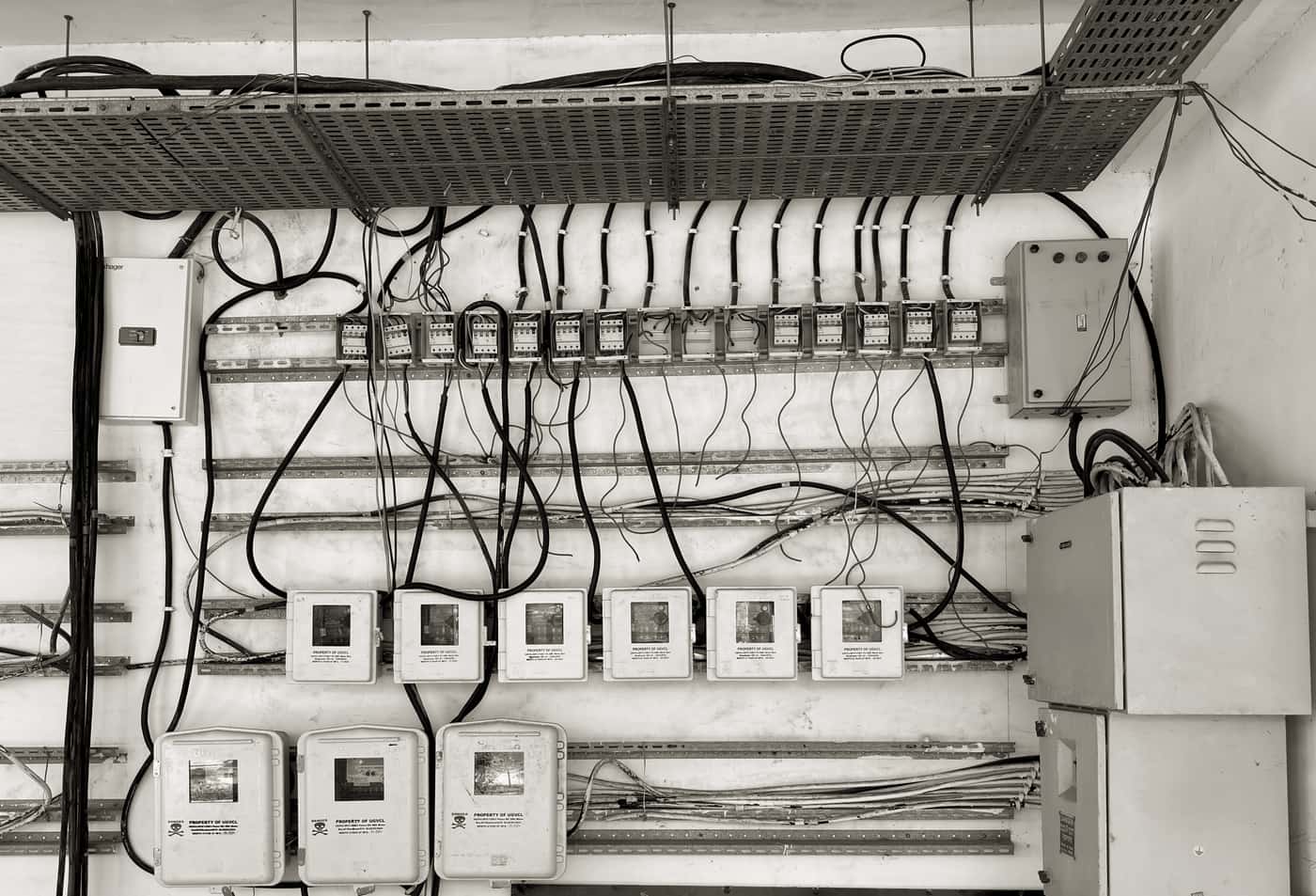
"Low EMF" is the most common claim in infrared sauna marketing and one of the least defined. This page explains what is being measured, what the units mean, and — the important part — why two honest manufacturers measuring the same cabin can publish wildly different numbers.
What is being measured
Any device drawing alternating current produces an electromagnetic field. In an infrared sauna, the source is the heating elements and their wiring, which sit inside the cabin walls, close to where you are sitting. "EMF" in this marketing context almost always means the magnetic component specifically.
The frequency matters too. Mains-powered heating elements operate at extremely low frequency — ELF, conventionally the band up to about 300 Hz. That is why a product naming ELF separately, as some blankets do, is being more precise than one that just says "EMF".
The units
| Unit | Symbol | Relationship | Where you will see it |
|---|---|---|---|
| Gauss | G | The base CGS unit | Rarely, on sauna listings |
| Milligauss | mG | 1 mG = 0.001 G | The usual unit on sauna listings |
| Tesla | T | SI unit | Scientific and regulatory literature |
| Microtesla | µT | 1 µT = 10 mG | Regulatory guidance documents |
Converting between them: 8 mG = 0.8 µT. If you are comparing a manufacturer's mG figure against a regulatory guideline expressed in µT, divide the mG figure by 10.
Why distance changes everything
This is the part that makes published sauna EMF figures close to useless, and it is simple physics rather than anything controversial: magnetic field strength from a source falls off steeply as you move away from it.
The practical consequence is that a meter held against a heater panel and the same meter held where a person's back actually sits are measuring very different things. A manufacturer can measure at the bench and honestly report a low number; another can measure at the panel and honestly report a much higher one for a physically identical cabin. Neither is lying. The numbers are simply not answering the same question.
What the published figures look like in practice
We surveyed the infrared saunas and blankets available through mainstream retail and compiled every EMF statement we could find. One product in eight published a numeric figure. None published a measurement distance. The full table is at low-EMF sauna comparison.
That is the honest state of the market: EMF is a marketing category rather than a specification, and it is not currently something you can shop on however much you would like to.
Where actual guidance comes from
We are not a health authority and we hold no credentials to tell you what exposure level is safe. The organizations whose job that is:
- ICNIRP — the International Commission on Non-Ionizing Radiation Protection publishes exposure guidelines that are referenced internationally, including limits for low-frequency magnetic fields.
- The World Health Organization maintains a program on electromagnetic fields and health, including its assessments of the low-frequency evidence base.
Both are linked at the bottom of this page. If EMF exposure is a genuine concern for you, read those rather than a sauna retailer's marketing copy — and if you have a specific medical reason for concern, such as an implanted device, ask a doctor rather than a manufacturer.
What you can control
- 1Distance. Field strength falls off with distance whatever cabin you own. Sitting away from panels rather than pressed against them is entirely within your control and is a larger lever than the difference between brands.
- 2Which specs you shop on. Wattage, circuit requirement, spectrum and interior dimensions are published by some manufacturers and are directly useful. EMF currently is not.
- 3Whether you pay a premium for the claim. Our view: not for an unqualified one. Every brand makes it.
- 4What you ask for. A manufacturer that will give you a number and a distance is giving you something real. Ask, in writing, before you buy.
Questions people actually ask
What does low EMF mean on an infrared sauna?
What is a safe EMF level?
How many milligauss is low for a sauna?
What is the difference between EMF and ELF?
Should I buy an EMF meter to check my sauna?
Sources
Read next
- Low-EMF sauna comparisonEvery published figure we could find, in one table.Read it
- Best infrared saunasRanked on the specs that actually exist.Read it
- Infrared sauna buying guideWhat to shop on instead.Read it
- Best sauna blanketsWhere the EMF marketing is loudest.Read it
- Best low-EMF infrared saunasCabins ranked on disclosure.Read it
- Heavenly Heat sauna reviewOne maker's published figures.Read it
- Clearlight sauna reviewA claim with no published test.Read it
Every pick on this page comes from published specifications, not from hardware we own. Read how we pick — including what spec-led ranking cannot tell you.