Infrared sauna buying guide
Ordered by what actually constrains the decision rather than by what is easiest to write about. Circuit first, because a cabin you cannot power is not a cabin.
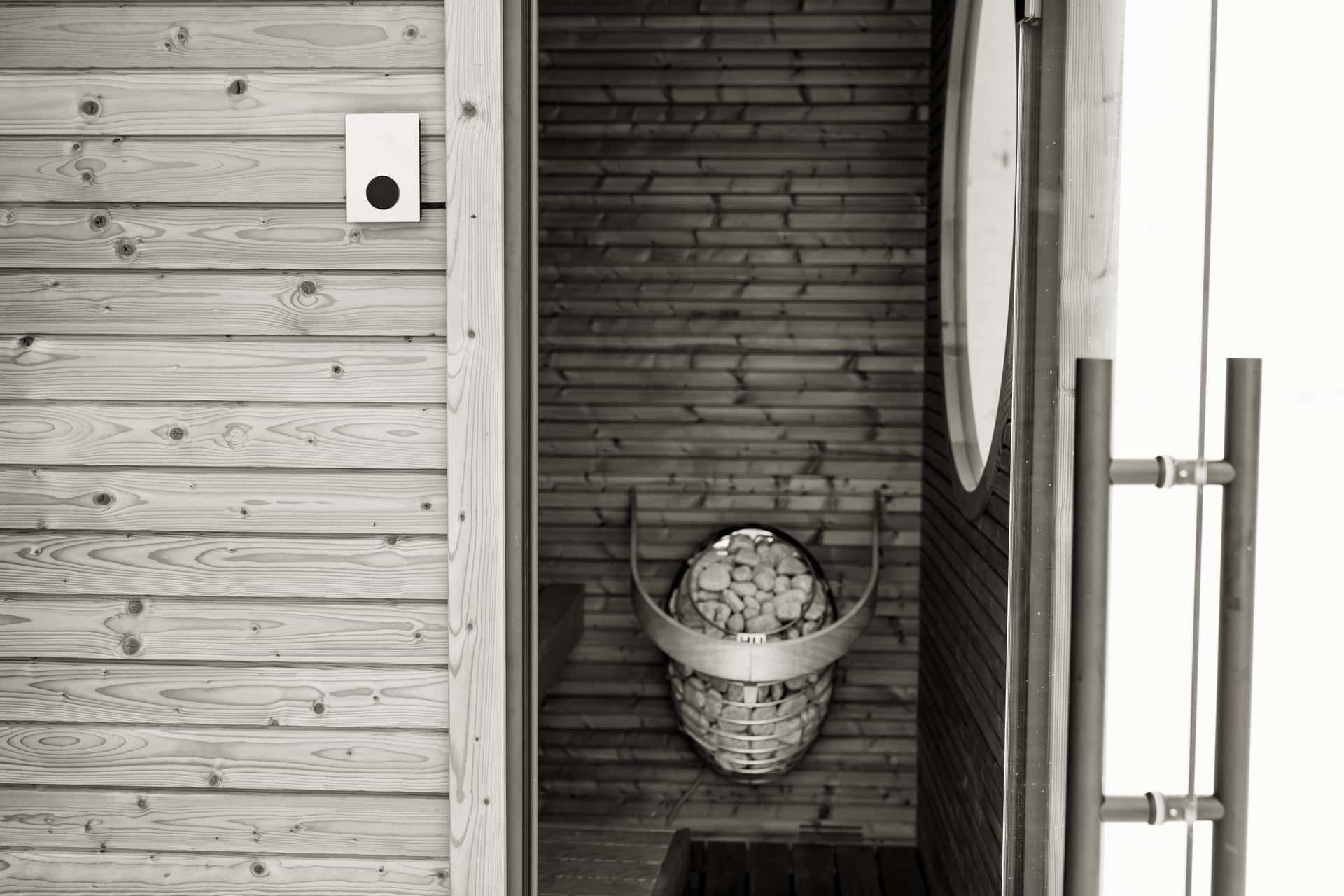
Most buying guides for this category start with size and finish with electrical. That order is backwards, and it is why people end up with a cabin sitting in a garage waiting for an electrician who cannot get a circuit to it. This one runs in the order the constraints actually bind.
Step 1: Your electrical panel
Before you look at a single cabin, establish three things: how many spare breaker slots you have, what capacity is available, and how far the cabin's location is from the panel.
| Cabin type | Typical draw | Circuit needed | Practical difficulty |
|---|---|---|---|
| Small far infrared | 1,200–1,800 W | Sometimes a standard 15 A outlet | Low |
| 2–3 person far infrared | 2,100–2,240 W | Dedicated 20 A, 120 V | Moderate — a new run |
| Full spectrum | 3,000–3,600 W | 220 V | High — electrician and usually a permit |
| Traditional (for comparison) | 4.5–8 kW | 240 V | High |
Treat a listing that does not publish wattage as a listing you cannot plan around. Ask the seller before ordering — several cabins we surveyed publish nothing at all on this.
Step 2: Far infrared or full spectrum
Far infrared is the heating band and every cabin produces it. Full spectrum adds near and mid infrared, roughly doubles the draw and usually forces 220 V. The near-infrared research base is real but narrower than the marketing implies, and its dose depends on irradiance and distance — neither of which any cabin publishes.
If you want near infrared and the wiring is a problem, a far-infrared cabin plus a standalone red light panel gets you both bands with control over distance. The full argument is in full spectrum vs far infrared.
Step 3: Size, measured properly
- 1Measure the delivery path, not just the destination — doorway width, stairwell turns, ceiling height on the way. Cabins ship as flat panels, and the largest panel has to get in. This ends more basement sauna projects than any other single factor.
- 2Allow the manual's stated clearances behind and above the cabin. Do not assume; check.
- 3Look for interior dimensions. Only a minority of listings publish them. Exterior dimensions tell you if it fits the room; bench depth tells you if it fits you.
- 4Buy for the people who will actually use it. A three-person cabin costs more to buy and more to heat on every session for a third seat that in most homes stays empty.
Step 4: Wood
Hemlock is the default and is genuinely fine for an indoor cabin in a conditioned room. Cedar costs more and earns it outdoors or in high humidity, where its rot resistance matters. Indoors, the difference is largely aroma and appearance. Do not overpay for cedar in a dry basement — see cedar vs hemlock vs spruce for the properties that actually differ.
Step 5: The specs you will not get
Going in knowing what is missing saves you from assuming it exists:
- Warm-up time. Nobody publishes it. Expect 30–45 minutes from cold, longer in an unheated space.
- A comparable EMF figure. One product in eight publishes a number, and none publish the measurement distance — see our EMF table.
- Interior bench depth, on most listings.
- Measured wall draw, as opposed to an element rating.
- Element placement. Where panels sit determines how evenly you heat. Foot heating, where it is mentioned, is a genuinely useful detail.
Step 6: What not to pay for
Bluetooth speakers, chromotherapy lighting, 'oxygen bars' and ionizers appear on almost every cabin at this tier and none of them should move your decision. They cost the manufacturer very little, they are impossible to evaluate, and a cabin chosen for its speaker is a cabin chosen badly. Spend the same money on the electrical work instead — it is the constraint that determines which category you can buy from at all.
A shortlist to start from
The cabins below are the ones that publish the most checkable information in their class. That is the criterion — not that they are the best-built cabins on the market, which is not something a spec sheet can tell you.
Cabins that publish enough to judge
RESTISLAND 3-Person Far Infrared Sauna
RESTISLAND
#ad We earn a commission if you buy, at no extra cost to you. How this is funded.
It publishes both the wattage and the circuit it needs — the pair of numbers that actually decides whether you can install a sauna where you want it.
| Capacity | 3 person |
|---|---|
| Power draw | 2,240 W |
| Circuit | 20 A |
| Wood | Canadian hemlock |
| Extras | 7-color chromotherapy, Bluetooth speakers |
| EMF, as published | Described as low EMF; no figure given |
| Spectrum | Far infrared |
What works
- States the circuit requirement up front — most listings make you infer it
- 2,240 W is a real number you can run a running-cost calculation against
- Tempered glass door on a sub-premium cabin
What doesn't
- A dedicated 20 A circuit is not optional and most rooms lack a spare one
- 'Low EMF' again carries no figure
- No near infrared
Skip it ifyour only free outlet is on a shared kitchen or bathroom circuit. At 2,240 W this will trip a 15 A breaker, and an extension cord is a fire risk rather than a workaround.
Dynamic Lugano 3-Person Far Infrared Sauna
Dynamic Saunas
#ad Price as of October 23, 2026. We earn a commission if you buy, at no extra cost to you. How this is funded.
One of the few cabins in this price class that puts an EMF number in the listing rather than the word 'low' on its own — which is the only reason it can be ranked against anything.
| Capacity | 3 person |
|---|---|
| Wood | Canadian hemlock |
| Heater type | Carbon far-infrared panels |
| EMF, as published | Under 8 mG |
| Measurement distance | Not published |
| Spectrum | Far infrared only |
| Power draw | Not published in the listing |
What works
- Publishes an actual EMF figure instead of the unqualified word 'low'
- Hemlock rather than a softwood that resins at temperature
- Three-person footprint without the premium-tier price
What doesn't
- The EMF figure has no stated measurement distance, so it cannot be compared like for like
- Far infrared only — no near or mid wavelengths
- Assembly is genuinely a two-person job
Skip it ifyou want full-spectrum output. This is a far-infrared cabin and no amount of marketing language changes that — if near infrared matters to you, you are shopping in a different tier.
Duthss 3-Person Full-Spectrum Infrared Sauna
Duthss
#ad Price as of October 23, 2026. We earn a commission if you buy, at no extra cost to you. How this is funded.
Full spectrum at this size means a 220 V circuit, and the listing says so instead of burying it. That single line is worth more than the whole feature list.
| Capacity | 3 person |
|---|---|
| Power draw | 3,600 W |
| Voltage | 220 V |
| Interior | 60" W × 41" D × 75" H |
| Heaters | 4 carbon panels plus 4 red-light tubes |
| Wood | Hemlock |
| Extras | Foot heating, insulated glass |
What works
- Publishes interior dimensions, not just the outside box
- Foot heating addresses the most common complaint about infrared cabins
- The 220 V requirement is stated openly rather than discovered on delivery day
What doesn't
- 220 V means an electrician, a permit in most jurisdictions and a real install cost
- No EMF figure published
- 3,600 W is expensive to run — check the arithmetic before you commit
Skip it ifyou are not prepared to add a 220 V circuit. Budget the electrical work before the cabin, because on this unit the wiring is not optional.
Heat Wave Sonoma 3-Person Corner Infrared Sauna
Heat Wave
#ad Price as of October 23, 2026. We earn a commission if you buy, at no extra cost to you. How this is funded.
A corner cabinet is the difference between a sauna that fits your basement and one that does not, and it is the spec nobody puts in a comparison table.
| Capacity | 3 person |
|---|---|
| Footprint | Corner |
| Wood | Thick hemlock interior |
| Heaters | 7 carbon infrared |
| Lighting | Chromotherapy light included |
| EMF, as published | Described as low EMF; no figure given |
| Power draw | Not published in the listing |
What works
- Corner geometry reclaims a room's least useful square footage
- Seven heater panels rather than the four common at this size
- Hemlock interior specified by thickness, not only by species
What doesn't
- 'Low EMF' with no number attached is marketing, not a spec
- Corner cabinets are harder to resell than rectangles
- Bench depth is not published, which matters at three people
Skip it ifyou have a straight wall to give it. A corner unit costs you interior volume for the same outside dimensions, so you would be paying for geometry you do not need.
Questions people actually ask
What should I look for when buying an infrared sauna?
How much power does an infrared sauna use?
What size infrared sauna should I buy?
Is hemlock or cedar better for an infrared sauna?
How long do infrared saunas last?
Sources
- Amazon.com — infrared sauna listings surveyed for published specifications — checked Sep 7, 2026
- US Energy Information Administration — electricity price data used in the running-cost reasoning — checked Sep 7, 2026
Read next
- Best infrared saunasThe ranking this guide supports.Read it
- Full spectrum vs far infraredStep 2, in depth.Read it
- Sauna running costsWhat a session actually costs at your rate.Read it
- Low-EMF sauna comparisonThe spec you cannot shop on.Read it
- Carbon vs ceramic infrared heatersWhich heat you get.Read it
- Best infrared saunas for the moneyWhat to stop paying for.Read it
- Best full-spectrum infrared saunasWhen the label is worth paying for.Read it
- Is an infrared sauna worth it?The full bill, first.Read it
- Clearlight sauna reviewWhat a full spec sheet looks like.Read it
- Infrared sauna installation guideAfter the order lands.Read it
Every pick on this page comes from published specifications, not from hardware we own. Read how we pick — including what spec-led ranking cannot tell you.