Carbon vs ceramic infrared sauna heaters
Carbon panels are large and warm. Ceramic tubes are small and hot. The same wattage delivered two ways feels noticeably different — and several cabins now use both.
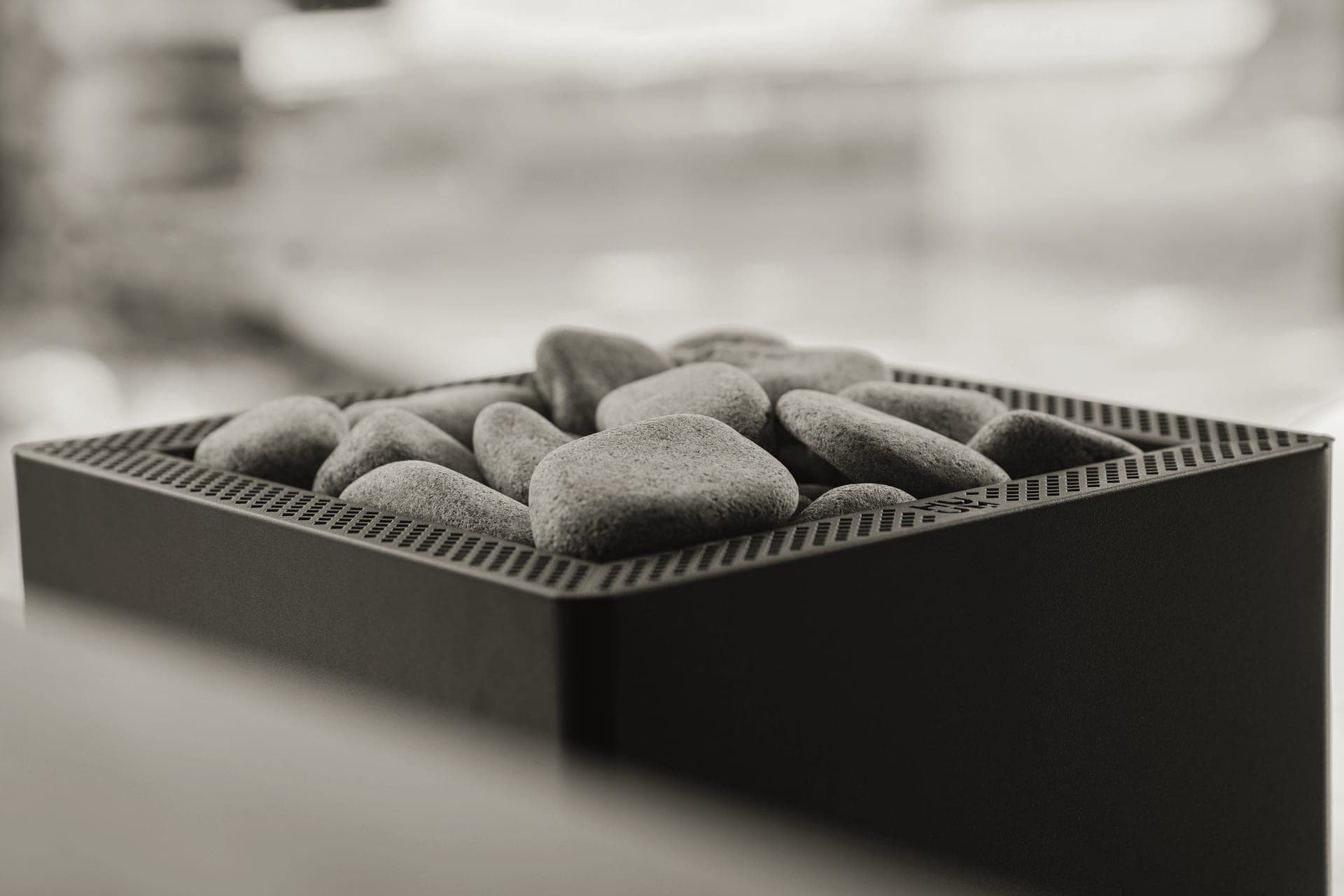
The short version: carbon panels spread heat across a large, moderately warm surface, which feels even and gentle. Ceramic tubes concentrate it in small, much hotter elements, which feels more intense and warms you faster near the tube. Choose carbon for comfort and evenness; ceramic for intensity; a hybrid if you want some of each.
The two side by side
| Carbon panels | Ceramic tubes | |
|---|---|---|
| Emitter size | Large flat panels | Small tubes or rods |
| Surface temperature | Moderate | Much hotter — one listing notes tube surfaces run far above room temperature |
| How it feels | Even, gentle, wraparound | Intense close to the tube, less even across the body |
| Warm-up | Typically slower | Listings claim faster, around 10 minutes to a usable temperature |
| Hotspots | Few | More, near each element |
| Touch safety | Lower surface temperature | Guards matter more |
Warm-up claims are the sellers' own and are usually to a usable, not a maximum, temperature. No listing publishes a like-for-like comparison, so treat the direction of each difference as more reliable than any number.
Why the same wattage feels different
Two cabins can both draw around 1,800 W and feel nothing alike. Spread across large carbon panels, that power produces a broad, moderately warm surface that heats you evenly from several sides. Concentrated in a few ceramic tubes, the same power produces small, much hotter sources — you feel them strongly when you are close and less so elsewhere. One ceramic cabin here publishes six tubes at 280 W each, which is the kind of per-element specification that lets you picture this.
Emissivity — how efficiently a surface radiates — is often invoked in this debate. It is a real property, but Sun Home's own emissivity testing page is careful to say that surface emissivity results are not measurements of energized heaters or of the dose reaching a user. We would treat any heater-material claim the same way: a question to ask, not a tiebreaker.
Hybrids
Several cabins combine carbon panels with a few ceramic tubes — broad even heat from the panels, extra intensity from the tubes. One three-person hybrid here publishes eight carbon panels and three ceramic tubes. The hybrid is a reasonable answer if you are not sure which you prefer, with the caveat that its listing gives two different wattages in two places, which is exactly the kind of inconsistency to query before planning a circuit.
Which to choose
- Carbon, if you want gentle, even heat for long sessions, and fewer hotspots.
- Ceramic, if you want more intensity and faster warmth, and do not mind less even heating.
- A hybrid, if you want both, or are unsure.
- Either, if it publishes its wattage, heater count and layout — which matters more than the heater material.
Carbon, ceramic and hybrid
Dynamic Lugano 3-Person Far Infrared Sauna
Dynamic Saunas
#ad Price as of Sep 27, 2026. We earn a commission if you buy, at no extra cost to you. How this is funded.
One of the few cabins in this price class that puts an EMF number in the listing rather than the word 'low' on its own — which is the only reason it can be ranked against anything.
| Capacity | 3 person |
|---|---|
| Wood | Canadian hemlock |
| Heater type | Carbon far-infrared panels |
| EMF, as published | Under 8 mG |
| Measurement distance | Not published |
| Spectrum | Far infrared only |
| Power draw | Not published in the listing |
What works
- Publishes an actual EMF figure instead of the unqualified word 'low'
- Hemlock rather than a softwood that resins at temperature
- Three-person footprint without the premium-tier price
What doesn't
- The EMF figure has no stated measurement distance, so it cannot be compared like for like
- Far infrared only — no near or mid wavelengths
- Assembly is genuinely a two-person job
Skip it ifyou want full-spectrum output. This is a far-infrared cabin and no amount of marketing language changes that — if near infrared matters to you, you are shopping in a different tier.
KUNSANA 2–3 Person Corner Ceramic Infrared Sauna with Red Light, 1,810 W
KUNSANA
#ad Price as of Sep 27, 2026. We earn a commission if you buy, at no extra cost to you. How this is funded.
An all-ceramic cabin that publishes its tube count and per-tube wattage, in a corner footprint that fits where a rectangle will not.
| Heating | 6 ceramic tube heaters at 280 W each, plus a foot warming plate |
|---|---|
| Power | 1,810 W at 120 V |
| Wood | Canadian hemlock |
| Shape | Corner |
| Dimensions | 47.09" × 47.09" × 75.31" |
| Weight | 295 lb |
What works
- Per-heater wattage published — unusually specific
- Corner footprint
- Foot heating
What doesn't
- Ceramic heat is more intense and less even than large carbon panels
- Red light wavelengths and irradiance not stated in the feature text
- No EMF figure
Skip it ifyou prefer gentle, even heat. Ceramic tubes are the intense option.
KUNSANA 3-Person Ceramic and Carbon Infrared Sauna, Hemlock
KUNSANA
#ad Price as of Sep 27, 2026. We earn a commission if you buy, at no extra cost to you. How this is funded.
Combines broad carbon panels with small, hot ceramic tubes — the hybrid that tries to get carbon's even warmth and ceramic's intensity in one cabin.
| Heating | 8 far-infrared carbon panels plus 3 ceramic heating tubes |
|---|---|
| Temperature range | 77–149 °F |
| Warm-up | 8–15 minutes to a usable (not maximum) temperature, per the listing |
| Power, as listed | Stated as both 1,950 W and 2,050 W in different parts of the listing |
| Wood | Eastern Canadian hemlock |
| Dimensions | 62.99" × 42.91" × 75.79" |
What works
- Hybrid heating — carbon and ceramic
- A stated temperature range and a warm-up figure
- Three-person capacity
What doesn't
- The listing gives two different wattages — confirm before planning the circuit
- Ceramic tube surfaces run far hotter than the room
- No EMF figure at a distance
Skip it ifyou need a definitive power figure to plan wiring. Ask the seller which wattage is correct.
Albott 4-Person Infrared Sauna, 2145 W, 10 Carbon Panels
Albott
$2,999.99 · 7% off
#ad Price as of Sep 27, 2026. We earn a commission if you buy, at no extra cost to you. How this is funded.
Ten panels and a published wattage on a cabin whose dimensions are also published — and separate foot heating, which is the coldest part of any infrared session.
| Power | 2145 W |
|---|---|
| Panels | 10 low-EMF carbon |
| Dimensions | 63.2" × 37.2" × 75.2" |
| Weight | 400 pounds |
| Foot heating | Tourmaline stone panel |
| Extras | 7-color light, dual Bluetooth speakers, LCD panel |
| EMF figure | Not published |
What works
- Publishes wattage, panel count and full external dimensions together
- Dedicated foot heating addresses the real weak point of infrared cabins
- 2145 W still lands on a 20 A circuit rather than needing 240 V
What doesn't
- 400 lb of flat-packed cabin needs two people and a clear route in
- "7-color light therapy" is a mood feature, not a clinical one, whatever the listing implies
- Low EMF is claimed with no figure attached
Skip it ifyou want full-spectrum heat. This is far infrared with extras; near and mid infrared are a different and dearer category.
Heater material is one choice among several; the others — circuit, spectrum, EMF and wood — are in the infrared buying guide, and EMF disclosure is ranked on the low-EMF roundup.
Questions people actually ask
Are carbon or ceramic infrared heaters better?
Do ceramic infrared saunas heat faster?
What is a hybrid carbon and ceramic sauna?
Does heater emissivity matter?
Sources
- Amazon.com — ceramic infrared sauna listings, heater configurations as published by the sellers — checked Sep 11, 2026
- Sun Home Saunas — infrared heater emissivity test results and their limits — checked Sep 11, 2026
Read next
- Infrared sauna buying guideThe other specs that decide it.Read it
- Full spectrum vs far infraredThe spectrum question.Read it
- Best low-EMF infrared saunasRanked on disclosure.Read it
- Best infrared saunas for the moneyValue on specs.Read it
- Best full-spectrum infrared saunasCabins with more than one emitter.Read it
Every pick on this page comes from published specifications, not from hardware we own. Read how we pick — including what spec-led ranking cannot tell you.