Sunlighten vs Clearlight
Two premium brands that dominate the searches and neither sells through the channel we can link. Here is what each publishes, what to ask them, and what your money buys at this tier.
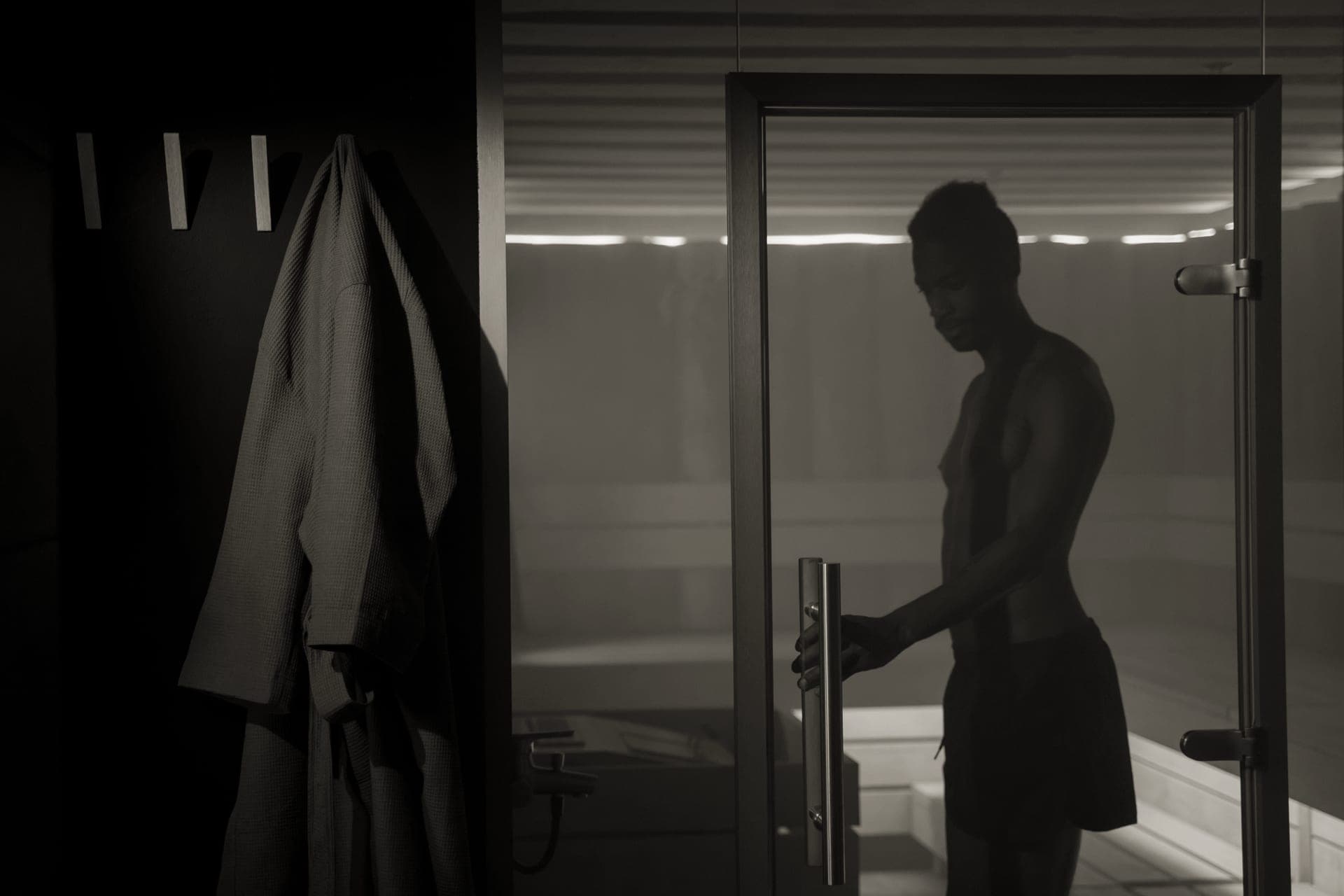
Both brands appear constantly in this category's search results, and both operate a direct sales model with a consultation step. That model is not a red flag on its own — cabins at this price are configured, delivered and installed rather than boxed and shipped — but it does mean the published specification is thinner than the sales conversation, and you should go into that conversation with a list.
What actually separates a premium cabin from a mid-range one
- 1Spectrum control. Premium cabins typically offer near, mid and far infrared with the ability to select bands. Mid-range full-spectrum cabins usually deliver a fixed combination.
- 2Published EMF and ELF figures, with a measurement distance. This is the single biggest differentiator at the top of the market, and the one worth pressing hardest on — see our EMF page for why the distance is the whole question.
- 3Wood grade and joinery. Clear, knot-free timber and proper joinery rather than panel-and-bracket assembly.
- 4Warranty length and what it covers. Heaters, electronics and cabinet are often warranted separately and for very different periods.
- 5Installation and support. A cabin delivered, assembled and commissioned is a materially different purchase from a freight drop at the curb.
The questions to ask either brand
| Ask | Why it matters |
|---|---|
| What is the EMF reading, and at what distance from the emitter was it taken? | Without a distance the figure is not comparable to anything, including the competitor's. |
| What is the measured wall draw, and what circuit does it need? | Advertised wattage is often an element rating. The circuit determines your install cost. |
| Which wavelengths, at what irradiance, at what distance? | The near-infrared dose question — see irradiance explained. |
| What is the interior bench depth and internal height? | Exterior dimensions tell you if it fits the room, not if it fits you. |
| What does the warranty cover, and for how long, per component? | Heaters, electronics and cabinet are usually warranted differently. |
| Is delivery curbside or is assembly included? | At this price, installation should be part of the conversation. |
How to judge the answers
A brand that answers the EMF question with a figure and a distance is giving you something checkable. A brand that answers with "ultra low" or "virtually zero" is not. That is not a judgment about either company specifically — it is the test we would apply to any manufacturer, and it is the test almost the entire category fails.
The same applies to irradiance. If a cabin's near-infrared output is a selling point, the manufacturer should be able to state mW/cm² at a stated distance. If they cannot, the near-infrared claim is a feature rather than a dose.
Is the premium tier worth it?
Honestly: for heat, no. Far-infrared output at 2,000-odd watts is broadly similar technology whatever it costs, and a mid-range cabin will make you just as hot. What the premium tier buys is spectrum control, published data, build quality, warranty and support.
Whether that is worth several times the price is a judgment about how much you value verifiable information and a supported install. If you would be equally happy with a cabin whose specs you cannot check, the mid-range options on our best infrared saunas page will do the heating part identically.
One genuinely useful middle path: buy a well-specified mid-range far-infrared cabin and add a standalone red light panel. You get controllable near-infrared dose — controllable in a way no built-in tube is — for a fraction of the premium-tier difference.
Mid-range cabins you can compare on published specs
RESTISLAND 3-Person Far Infrared Sauna
RESTISLAND
#ad We earn a commission if you buy, at no extra cost to you. How this is funded.
It publishes both the wattage and the circuit it needs — the pair of numbers that actually decides whether you can install a sauna where you want it.
| Capacity | 3 person |
|---|---|
| Power draw | 2,240 W |
| Circuit | 20 A |
| Wood | Canadian hemlock |
| Extras | 7-color chromotherapy, Bluetooth speakers |
| EMF, as published | Described as low EMF; no figure given |
| Spectrum | Far infrared |
What works
- States the circuit requirement up front — most listings make you infer it
- 2,240 W is a real number you can run a running-cost calculation against
- Tempered glass door on a sub-premium cabin
What doesn't
- A dedicated 20 A circuit is not optional and most rooms lack a spare one
- 'Low EMF' again carries no figure
- No near infrared
Skip it ifyour only free outlet is on a shared kitchen or bathroom circuit. At 2,240 W this will trip a 15 A breaker, and an extension cord is a fire risk rather than a workaround.
Dynamic Lugano 3-Person Far Infrared Sauna
Dynamic Saunas
#ad Price as of October 23, 2026. We earn a commission if you buy, at no extra cost to you. How this is funded.
One of the few cabins in this price class that puts an EMF number in the listing rather than the word 'low' on its own — which is the only reason it can be ranked against anything.
| Capacity | 3 person |
|---|---|
| Wood | Canadian hemlock |
| Heater type | Carbon far-infrared panels |
| EMF, as published | Under 8 mG |
| Measurement distance | Not published |
| Spectrum | Far infrared only |
| Power draw | Not published in the listing |
What works
- Publishes an actual EMF figure instead of the unqualified word 'low'
- Hemlock rather than a softwood that resins at temperature
- Three-person footprint without the premium-tier price
What doesn't
- The EMF figure has no stated measurement distance, so it cannot be compared like for like
- Far infrared only — no near or mid wavelengths
- Assembly is genuinely a two-person job
Skip it ifyou want full-spectrum output. This is a far-infrared cabin and no amount of marketing language changes that — if near infrared matters to you, you are shopping in a different tier.
Full-Body Red Light Therapy Panel, 5 Wavelengths, 120 Dual-Chip LEDs
Generic Amazon listing
#ad Price as of October 23, 2026. We earn a commission if you buy, at no extra cost to you. How this is funded.
Five wavelengths across 120 dual-chip diodes, with a published wattage. Dual chip means every LED emits more than one wavelength, so coverage is even rather than striped.
| LEDs | 120, dual chip |
|---|---|
| Wavelengths | 5, per the listing |
| Power | 200 W |
| Board size | Not published in the listing |
| Stand | Not published in the listing |
| Irradiance | Not published at a stated distance |
What works
- A published wattage and LED count
- Dual-chip diodes, so both main wavelengths come from every LED
- More wavelengths than the two-wavelength boards at this size
What doesn't
- No published board dimensions
- No irradiance figure at any distance
- Extra wavelengths have a thinner research base than 660 and 850 nm
Skip it ifyou want the largest treated area per dollar. Wavelength count is not coverage.
Questions people actually ask
Can you buy Sunlighten or Clearlight on Amazon?
Which is better, Sunlighten or Clearlight?
Are premium infrared saunas worth the money?
What is a cheaper way to get full spectrum?
Sources
Read next
- Low-EMF sauna comparisonThe measurement-distance problem in full.Read it
- Best infrared saunasWhat the mid-range actually delivers.Read it
- Infrared sauna buying guideThe full checklist, whatever your budget.Read it
- Best red light therapy panelsThe controllable route to near infrared.Read it
- Sun Home vs SunlightenPublished EMF against a claim.Read it
- Sun Home vs ClearlightWarranty against disclosure.Read it
- Sunlighten sauna reviewIncluding its published EMF report.Read it
Every pick on this page comes from published specifications, not from hardware we own. Read how we pick — including what spec-led ranking cannot tell you.