Planning a home sauna and cold plunge setup
The two halves have completely different requirements, and the thing that most determines whether you use it is the distance between them.
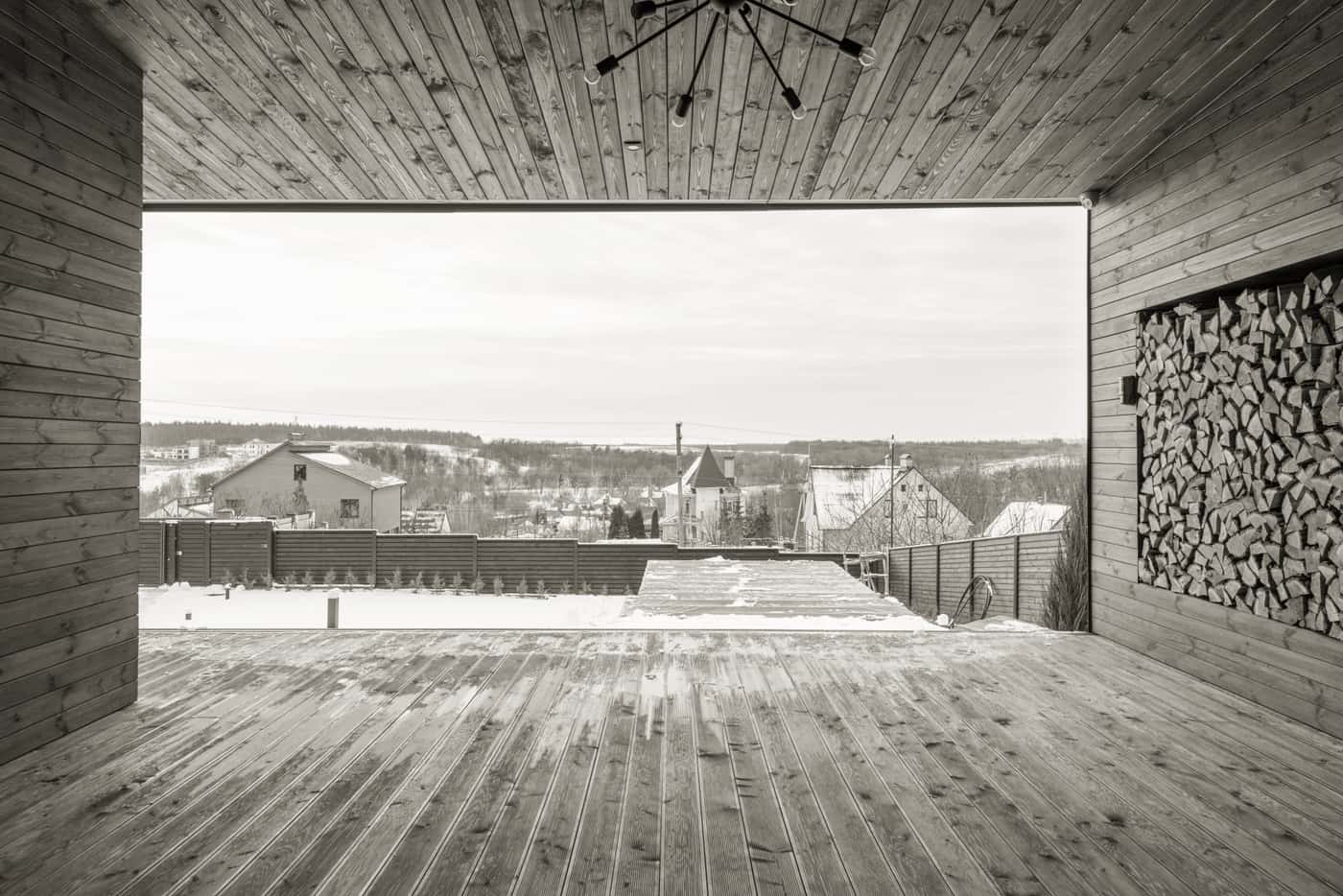
A combined setup is two installations with almost nothing in common: one is a heated timber room needing a heavy circuit, the other is a body of cold water needing filtration and a compressor. Planning them together — rather than adding the second to the first later — saves real money and produces something you actually use.
The thing that decides whether you use it
Siting the two halves
| Sauna | Cold plunge | |
|---|---|---|
| Power | 240 V dedicated (or none if wood-fired) | Standard outlet for a chiller |
| Water supply | None | Fill and refill access |
| Drainage | Helpful | Required — it gets emptied |
| Base | Level, drained, frost-stable | Level, drained; condensation puddle is constant |
| Shade | Irrelevant | Valuable — sun is a real heat load |
| Shelter | The structure is the shelter | A cover or roof helps considerably |
| Access | A door | Room to climb in and out safely |
The electrical picture
Plan both circuits at once. An electrician running one trench can pull two circuits for a fraction of the cost of two visits, and this is the single biggest saving available in a combined build.
- Sauna: 240 V dedicated, sized to the heater — commonly 30 A for 4.5 kW or 40 A for 6 kW. See the electrical guide.
- Chiller: a standard 110 V outlet, but a dedicated one and GFCI-protected, because it is outdoor equipment running continuously near water.
- Lighting: low voltage, rated for the environment. Getting in and out of a plunge in the dark is how people fall.
If the 240 V run is what is making this expensive, price a wood-fired sauna. It removes that circuit entirely and leaves you needing only the chiller outlet — which changes the budget substantially. See wood-burning vs electric.
Drainage and surfaces
A contrast setup generates a lot of water: from the plunge when it is emptied, from condensation on the tub, from people. Plan for it rather than discovering it.
- 1Slope the surface away from both structures. Water pooling against a sauna's base is how the timber rots.
- 2Non-slip surfaces throughout. Wet feet, cold hands and moving between hot and cold is exactly the combination that produces falls.
- 3A groundsheet under the plunge. It condenses continuously and will destroy a wooden deck or kill grass.
- 4Somewhere for the plunge to drain to that is not the sauna's foundation.
The rest space nobody plans for
The traditional pattern is heat, cold, rest, repeat — and the rest phase is where the heart rate comes back down. Standing in a cold yard is not resting.
A bench, somewhere sheltered, within a few steps of both, transforms a contrast session from an endurance exercise into something you look forward to. It is the cheapest component in the whole setup and the one nobody includes in the plan.
Build order
- 1Establish the habit first, cheaply. A sauna blanket or steam tent and a bath with bagged ice. This costs almost nothing and tells you within a month whether you will keep doing it.
- 2Get electrical quotes against the actual spot in your garden, for both circuits, before choosing any product. The answer sometimes changes which category you buy from.
- 3Do the groundwork. Base, drainage, surfaces. Both structures need it and doing it once for both is cheaper. See the foundation guide.
- 4Sauna next. It is the larger structure and the more constrained siting.
- 5Plunge after. Sited relative to the sauna, close.
- 6Chiller last, if at all — in a cold climate you may find you do not need one for months of the year.
The cold-climate advantage
Worth planning around explicitly. Below about 50 °F ambient, an outdoor plunge tub reaches research-typical temperatures on its own. In a genuinely cold region that is five or six months of free cold water.
The planning consequence: buy the tub first and the chiller later. Run it through a winter on ambient temperature, see how often you actually use it, and buy a chiller sized to what you learned rather than to what you guessed. That order costs less and produces a better-matched setup.
Common mistakes
- Siting them far apart. The single biggest one. Nobody walks 30 feet in January twice a session.
- Forgetting the rest space. The pattern is heat, cold, rest — and the third part needs somewhere to happen.
- Two electrician visits instead of one. Plan both circuits together.
- Buying the chiller before the tub. You cannot size a chiller without knowing the volume it has to hold.
- Oversizing the plunge. Every gallon is more chiller, more ice and more running cost, permanently.
- No shade on the plunge. Direct sun is a substantial continuous heat load the chiller fights all afternoon.
The full cost picture, including the install lines people leave out, is in home recovery setup budget.
Equipment for a combined setup
INFRADELUX 4-Person Outdoor Barrel Sauna, Japanese Cedar, 6 kW Harvia
INFRADELUX
#ad Price as of October 23, 2026. We earn a commission if you buy, at no extra cost to you. How this is funded.
A named Harvia heater, four-person capacity and a published roof covering — on this site's own order of priority, the heater comes first and the roof third, and this is the only barrel in stock that publishes both. The wood is Japanese cedar rather than the western red cedar we would otherwise argue for.
| Capacity | 4 person |
|---|---|
| Dimensions | 72 × 65 × 79 in (listing also gives 65 × 79 × 73 in) |
| Wood | Japanese cedar, per the listing |
| Heater | 6 kW Harvia |
| Type | Traditional barrel |
| Roof covering | Waterproof asphalt shingle roof, stated |
| Structure | Stated 1,000 lb load capacity |
| Circuit | 240 V — required for a 6 kW heater |
| Included | Sauna accessory set; stones NOT included, per the listing |
| Warranty | Personal use only — commercial or rental use is excluded |
What works
- A Harvia heater means a published spec sheet, a rated room volume and a real parts channel
- Publishes a roof covering and a structural load rating, which barrels rarely do
- 6 kW is properly sized for a four-person barrel volume
What doesn't
- Japanese cedar, not western red cedar — a named species, but not the one this site argues for outdoors
- Sauna stones are not included, so budget for a load of them
- A 240 V run to the yard is a real, permitted expense, and delivery is a curbside freight drop
Skip it ifyour yard has no realistic path for a 240 V run. Trenching a circuit to the back of a garden regularly costs more than the sauna, and it is not a corner worth cutting.
Ice Barrel 300 Cold Plunge Tub
Ice Barrel
#ad Price as of October 23, 2026. We earn a commission if you buy, at no extra cost to you. How this is funded.
Rigid rather than inflatable, and insulated rather than bare — the two properties that decide whether ice lasts an afternoon or a morning.
| Volume | 77 gallons |
|---|---|
| Construction | Rigid, fully insulated |
| Orientation | Upright, seated |
| Chiller compatible | Yes |
| Footprint | Barrel — the smallest floor area here |
| Wall thickness | Not published |
| Availability when checked | Buy box live and in stock, re-checked 2026-09-10 |
What works
- Insulation holds temperature between sessions, cutting ice use and chiller runtime
- Rigid walls need no re-inflating and no babysitting
- The smallest floor footprint of any tub on this list
What doesn't
- Upright seating only — no lying down, no leg extension
- 77 gallons is not much water above the shoulders for a tall person
- Rigid means bulky to store and impossible to move alone
Skip it ifyou are over about 6'2". An upright barrel puts tall shoulders above the waterline and there is no adjusting for it.
Specs above are the manufacturer's published figures — source.
AS ColdPlunge 1/3 HP Chiller, Built-In Filter and Pump
AS ColdPlunge
#ad Price as of October 23, 2026. We earn a commission if you buy, at no extra cost to you. How this is funded.
The integrated pump and filter is the reason to pick this one: an external-pump chiller needs three more purchases and four more hose connections to reach the same place.
| Cooling capacity | 1/3 HP |
|---|---|
| Minimum temperature | 42 °F |
| Pump | Built in, submersible |
| Filtration | Built in |
| Hoses | Insulated, included |
| Duty cycle | Rated for 24/7 operation |
| Fits | Cold plunge tubs and bathtubs |
| Pull-down time | Not published |
What works
- Pump and filter integrated — one box, one plug, no shopping list
- A 42 °F floor is cold enough for any protocol worth running
- Insulated hoses included rather than sold as an upgrade
What doesn't
- 1/3 HP is slow to pull a large tub down from ambient
- The 42 °F floor is warmer than the 37–39 °F the 1 HP units claim
- No published pull-down time, so sizing is arithmetic you do yourself
Skip it ifyour tub is over roughly 100 gallons or lives outdoors in a hot climate. At 1/3 HP you will be waiting overnight for a pull-down a 1/2 HP does in an afternoon.
Questions people actually ask
How close should a sauna and cold plunge be?
Can you run a sauna and cold plunge on the same circuit?
What order should you build a sauna and cold plunge in?
Do you need drainage for a cold plunge?
Should the cold plunge be in the sun or shade?
Sources
- Harvia — sauna heater installation and circuit requirements — checked Sep 7, 2026
- US Consumer Product Safety Commission — GFCI protection guidance for outdoor and wet locations — checked Sep 7, 2026
Read next
- Home recovery setup budgetWhat the whole thing costs.Read it
- Contrast therapy guideWhat you are building it for.Read it
- Outdoor sauna electrical guideThe circuit that dominates the budget.Read it
- Chiller sizing guideSizing the cold half.Read it
- Best saunas for garagesSlab, circuit and fumes.Read it
- Best sauna floor matsThe path between them.Read it
- Sauna and cold plunge warranties comparedWhy five feet matters.Read it
- Sauna vs cold plungeWhich to buy first.Read it
- Best sauna and cold plunge combosBundles and pairs.Read it
Every pick on this page comes from published specifications, not from hardware we own. Read how we pick — including what spec-led ranking cannot tell you.