Sauna vs infrared sauna
When people say 'sauna' they usually mean the hot, humid Finnish kind. Infrared is a different machine that produces a different sensation. Here is the difference in plain terms.
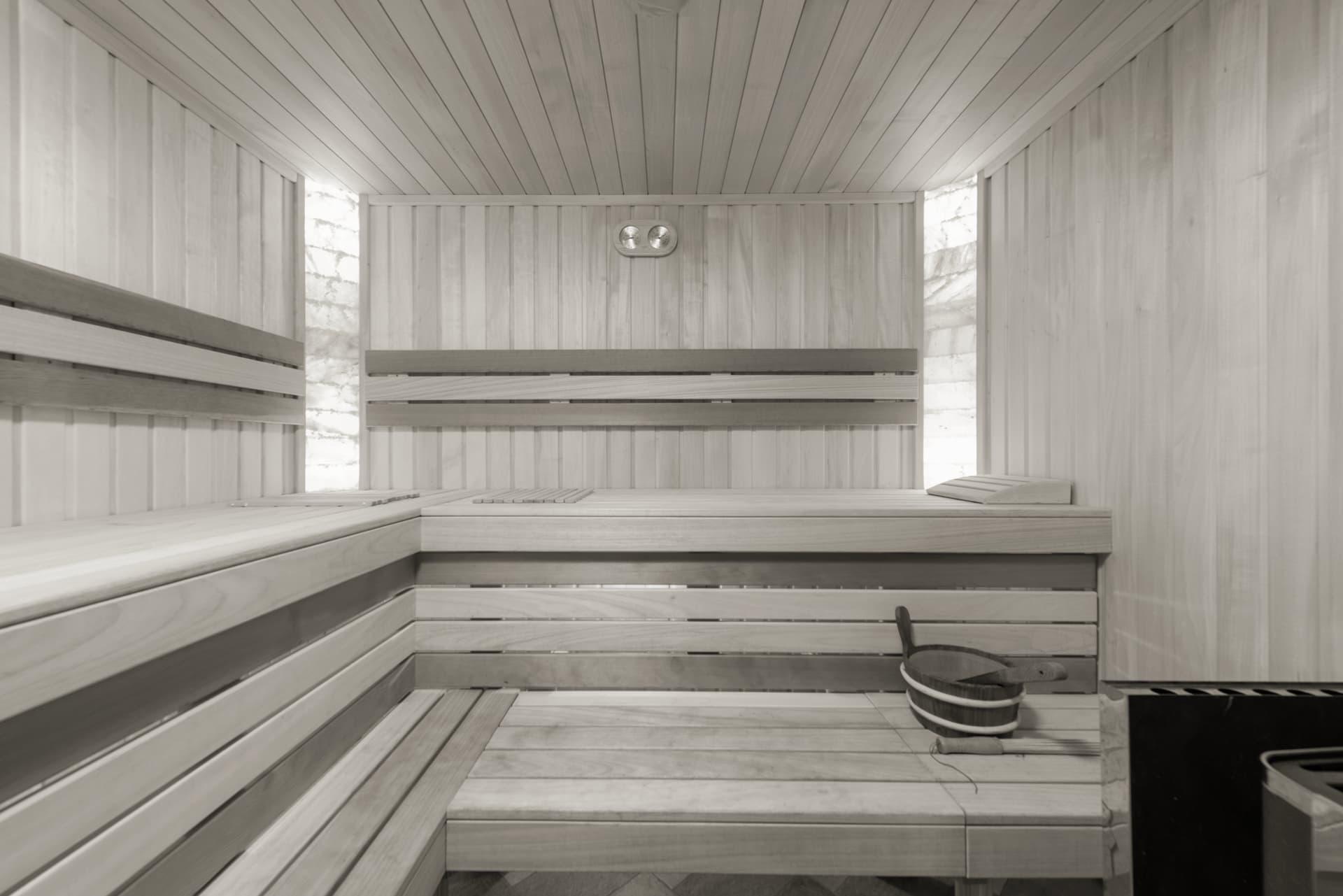
This question comes up because the word 'sauna' now covers two things that behave very differently. If you have used a sauna at a gym or a hotel, you have almost certainly used a traditional one — a hot, dry-or-humid room heated by a stove full of stones. An infrared sauna is a cabinet lined with panels that warm your body directly while the air stays comparatively cool.
Both make you sweat. They do not feel the same, and the difference is not subtle.
The difference in one table
| Traditional sauna | Infrared sauna | |
|---|---|---|
| Air temperature | 175–195 °F | 120–150 °F |
| What heats you | The hot air, plus radiant heat from the stove | Radiant panels, directly on the body |
| Humidity | Your choice — dry, or wet when you throw water | Dry only |
| Feeling on the face | Strong — the air itself is hot | Mild — the air stays comfortable |
| Session length people tolerate | Shorter, typically | Longer, typically |
| Electrical requirement | 240 V | Dedicated 20 A, or 220 V for full spectrum |
| Can be wood-fired | Yes | No |
Why the air temperature matters so much
In a traditional sauna, the air is hotter than your skin, so heat moves into you from every direction and you feel it on your face and in your breath. In an infrared cabin, the air is only mildly warm — the heat arrives as radiation on whatever surface faces a panel. Your front warms while your back stays cooler, and turning around changes the sensation.
This is why people report sweating heavily in an infrared cabin while feeling that it "doesn't feel like a sauna". Both things are true at once, and neither is a fault.
Which should you buy?
Start with the circuit, because it settles the question more often than preference does. A traditional electric heater needs 240 V. An infrared cabin usually needs a dedicated 20 A, 120 V circuit. If 240 V is out of reach and wood-firing is not an option — you are indoors, or you have no yard — infrared is the category that works, and it is a genuine product rather than a consolation.
If 240 V is available, the question becomes what you want. Want to throw water and feel heat on your face? Traditional. Want longer, gentler sessions with red light built in? Infrared. The full decision framework is in infrared vs traditional sauna; the wider comparison against steam rooms and hot tubs is in sauna vs steam room and sauna vs hot tub.
Things people get wrong about this comparison
- "Infrared is the modern version." It is not a successor — it is a different technology producing a different result. Traditional saunas are not obsolete.
- "Infrared is cheaper to run so it must be worse." Running cost differences between the two are under a dollar a session at typical US rates. Neither should be chosen on that basis.
- "Infrared penetrates deeper so it detoxifies more." We are not going to repeat that claim. Sweat composition and its relationship to detoxification are not what the marketing implies, and no source we would cite supports the framing.
- "A traditional sauna is always more expensive." At the small end, a two-person cedar cabin with a 6 kW Harvia is competitive with a mid-range infrared cabin. The cost difference is largely in the electrical work.
Where to start on either side
Dynamic Lugano 3-Person Far Infrared Sauna
Dynamic Saunas
#ad Price as of October 23, 2026. We earn a commission if you buy, at no extra cost to you. How this is funded.
One of the few cabins in this price class that puts an EMF number in the listing rather than the word 'low' on its own — which is the only reason it can be ranked against anything.
| Capacity | 3 person |
|---|---|
| Wood | Canadian hemlock |
| Heater type | Carbon far-infrared panels |
| EMF, as published | Under 8 mG |
| Measurement distance | Not published |
| Spectrum | Far infrared only |
| Power draw | Not published in the listing |
What works
- Publishes an actual EMF figure instead of the unqualified word 'low'
- Hemlock rather than a softwood that resins at temperature
- Three-person footprint without the premium-tier price
What doesn't
- The EMF figure has no stated measurement distance, so it cannot be compared like for like
- Far infrared only — no near or mid wavelengths
- Assembly is genuinely a two-person job
Skip it ifyou want full-spectrum output. This is a far-infrared cabin and no amount of marketing language changes that — if near infrared matters to you, you are shopping in a different tier.
Canadian Red Cedar 1–2 Person Traditional Sauna, 6 kW
MCP Distributions
#ad Price as of October 23, 2026. We earn a commission if you buy, at no extra cost to you. How this is funded.
6 kW into a one-to-two-person room is a lot of heater for the volume, which is exactly why it reaches temperature fast and holds it when you throw water.
| Capacity | 1–2 person |
|---|---|
| Type | Traditional, wet or dry |
| Wood | Canadian red cedar |
| Heater | 6 kW, rocks included |
| Rated maximum | 200 °F |
| Circuit | 240 V |
| Control | Heater-mounted |
What works
- Heater is generously sized for the cabin volume — fast recovery after a water throw
- Cedar interior at a small-cabin price
- Rocks included, which is not universal
What doesn't
- 240 V circuit required
- An oversized heater wastes energy if you only ever run short sessions
- 'One to two person' means one person plus a towel
Skip it ifyou run 20-minute sessions and care about the power bill. A 6 kW heater in a small room spends much of its cycle at full draw — a 4.5 kW would cost you less per session.
Durasage Lightweight Personal Steam Sauna
Durasage
#ad Price as of October 23, 2026. We earn a commission if you buy, at no extra cost to you. How this is funded.
The unglamorous, long-listed option. It is a steam tent with a timer, it folds into a closet, and it has been on sale long enough that you know exactly what you are getting.
| Type | Portable steam tent |
|---|---|
| Timer | 60 minutes |
| Storage | Folding frame |
| Heat source | Steam generator |
| Power draw | Not published in the listing |
| EMF | Not applicable — steam, not infrared |
What works
- Steam rather than infrared, so there is no EMF question to argue about
- Folds away, which is the entire point of a portable
- Long product history and a deep pool of owner reports
What doesn't
- Your head sits outside the tent — this is not a sauna experience
- Steam generators scale up and need descaling
- Nothing about it scales if you later want a cabin
Skip it ifyou already own a sauna blanket. This is a lateral move, not an upgrade, and you will use whichever is easier to set up — which is the blanket.
Questions people actually ask
What is the difference between a sauna and an infrared sauna?
Which is better for you, a sauna or an infrared sauna?
Is an infrared sauna hotter than a regular sauna?
Can I put a traditional sauna in an apartment?
Sources
- Harvia — traditional heater specifications and operating temperatures — checked Sep 7, 2026
- Amazon.com — infrared cabin listings, operating temperature ranges as published by the sellers — checked Sep 7, 2026
Read next
Every pick on this page comes from published specifications, not from hardware we own. Read how we pick — including what spec-led ranking cannot tell you.