Cold plunge benefits: what the evidence actually shows
The cold water immersion literature is real, specific, and less sweeping than the marketing. Every claim here links to a source, including the inconvenient one.
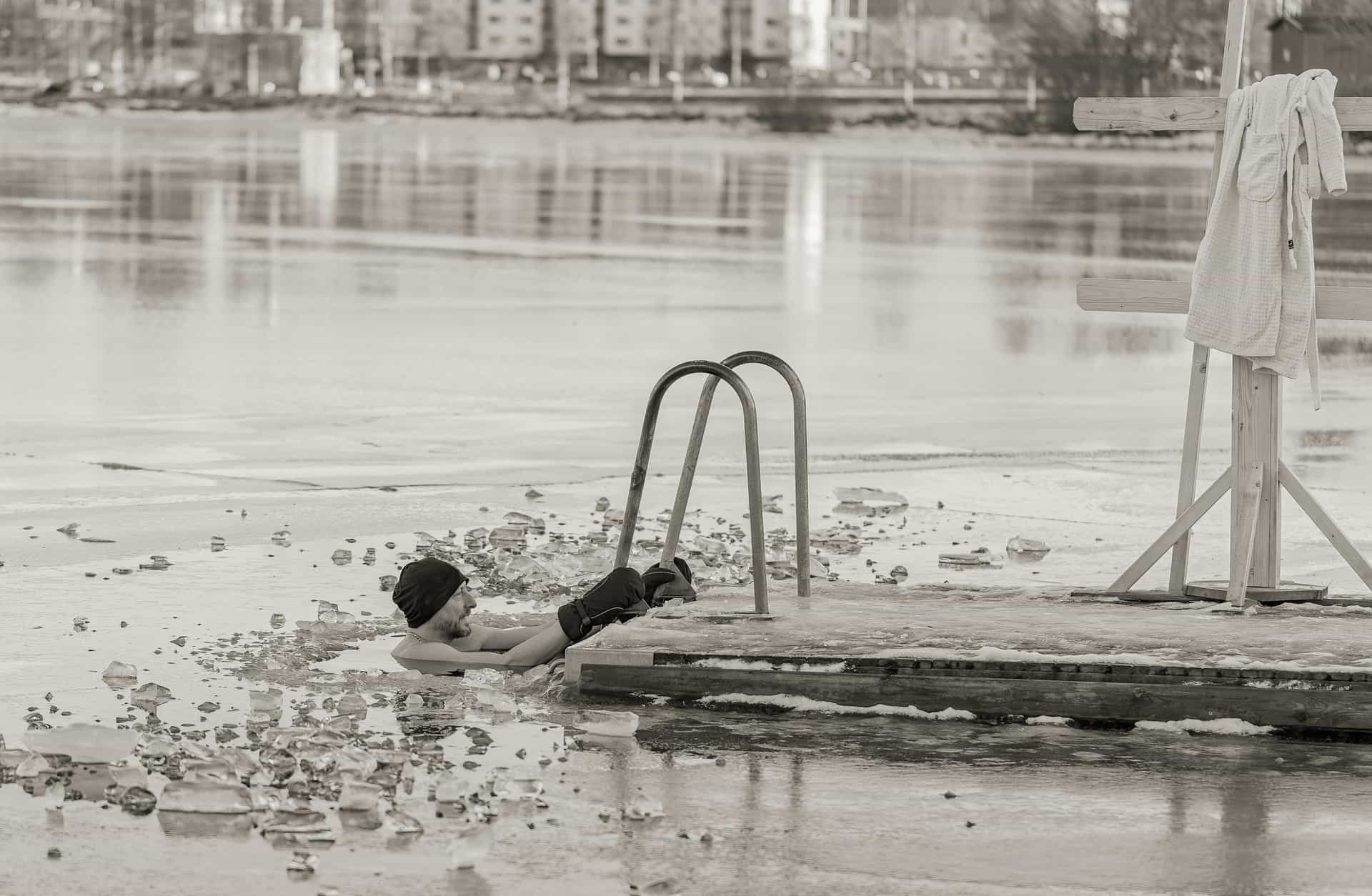
What has actually been studied
Cold water immersion has a longer research history than the current wellness interest suggests, and it comes from two quite different places: sports recovery, where it has been studied for decades, and cold water safety physiology, which exists because cold water kills people and researchers wanted to understand how.
Both literatures are useful and neither is the enthusiastic one the marketing draws on.
The recovery literature
Cold water immersion has been studied extensively for post-exercise recovery — perceived soreness, perceived recovery, and various physiological markers. Bleakley and Davison's review in the British Journal of Sports Medicine, linked below, examines the biochemical and physiological rationale and is a reasonable entry point.
The picture that emerges is more mixed than "cold plunges aid recovery" suggests. Effects on perceived soreness are more consistently reported than effects on objective performance markers, and study designs, water temperatures and immersion durations vary enough that comparing across them is genuinely difficult.
The finding that complicates it
This is the one we would most want you to know, and it is routinely absent from cold plunge content.
Roberts and colleagues, publishing in the Journal of Physiology, reported that cold water immersion immediately after resistance training attenuated acute anabolic signaling and long-term adaptations to strength training. In plain terms: cold immediately after lifting may blunt some of the muscle-building response you were training for.
That does not mean cold plunging is bad. It means timing matters if your goal is hypertrophy or strength adaptation. The straightforward response is to separate the cold from the training session — a different time of day, or a rest day. If you are not training for adaptation, it is a much smaller consideration.
The cold shock response
The best-established physiology in this whole area, and it comes from the safety literature rather than the wellness one. Sudden immersion in cold water produces an involuntary gasp, rapid uncontrolled breathing, and a sharp rise in heart rate and blood pressure. Tipton and colleagues' open-access review in Experimental Physiology covers it and is linked below.
Three practical consequences:
- Enter controlled, never head-first. The gasp reflex with your head underwater is how cold water drownings happen.
- The response strengthens as water gets colder, which is a genuine argument against chasing the lowest possible temperature.
- It attenuates with repeated exposure. Habituation is real, which is why starting warmer and working down is both more comfortable and safer.
What we are not going to claim
- Fat loss or 'brown fat activation' as a weight-loss mechanism. There is genuine research on brown adipose tissue and cold exposure; the leap to meaningful weight loss in humans from cold plunging is not one we can cite.
- Immune 'boosting'. A claim without a defined measurement.
- Specific mental health outcomes. People report feeling good after cold immersion and that is worth something; it is not a clinical claim we are qualified to make.
- 'Detoxification'. No consistent physiological meaning here either.
- Longevity. The observational longevity work in this space is on sauna cohorts, not cold immersion. Different intervention, different literature.
What the research does not settle
Optimal temperature, optimal duration, optimal frequency. Studies use a range of protocols and there is no consensus set of parameters that a consumer can point at and replicate. That is why our temperature guide describes the range the literature works in rather than prescribing a number — anyone giving you a precise protocol is going beyond the evidence.
The honest reason most people do it
They find it makes them feel good afterwards, and it is a genuinely useful discipline to have in a day. Neither of those requires a research citation, and neither is diminished by the evidence being narrower than the marketing.
Our position throughout this site: if you enjoy it, that is sufficient reason. It does not have to be medicine to be worth doing.
Questions people actually ask
Do cold plunges actually work?
Does cold plunging after a workout reduce gains?
Does cold plunging burn fat?
What is the cold shock response?
Is cold plunging safe?
Sources
- Roberts LA et al., 'Post-exercise cold water immersion attenuates acute anabolic signaling and long-term adaptations in muscle to strength training', Journal of Physiology — checked Sep 7, 2026
- Bleakley CM & Davison GW, 'What is the biochemical and physiological rationale for using cold-water immersion in sports recovery?', British Journal of Sports Medicine — checked Sep 7, 2026
- Tipton MJ et al., 'Cold water immersion: kill or cure?', Experimental Physiology (open access) — checked Sep 7, 2026
Read next
- Cold plunge protocolDuration, timing and what is cited.Read it
- Cold plunge temperature guideThe range the research works in.Read it
- Sauna benefits and the evidenceThe other literature.Read it
- Contrast therapy guideRunning both together.Read it
- Is a cold plunge worth it?Evidence meets cost.Read it
- Cold plunge vs cryotherapyThe other cold route.Read it
Every pick on this page comes from published specifications, not from hardware we own. Read how we pick — including what spec-led ranking cannot tell you.